Wemaxa AI for education & training
Adaptive learning. Educators stay in control.
We help schools, universities, training teams and EdTech platforms integrate adaptive tutoring, course creation, curriculum support, assessment, multilingual learning and workforce upskilling into practical education systems. AI can reduce preparation and administrative load, but teaching quality still depends on educators, sound pedagogy, transparent evaluation and the human relationships that make learning meaningful.
Reduce preparation without reducing teaching
Give educators better tools. Keep pedagogy human.
The strongest education use cases support preparation, practice, feedback and accessibility. AI can help detect patterns or generate drafts, but its role should remain visible, reviewable and subordinate to instructional goals rather than quietly becoming the curriculum, the teacher or the final judge of student ability.
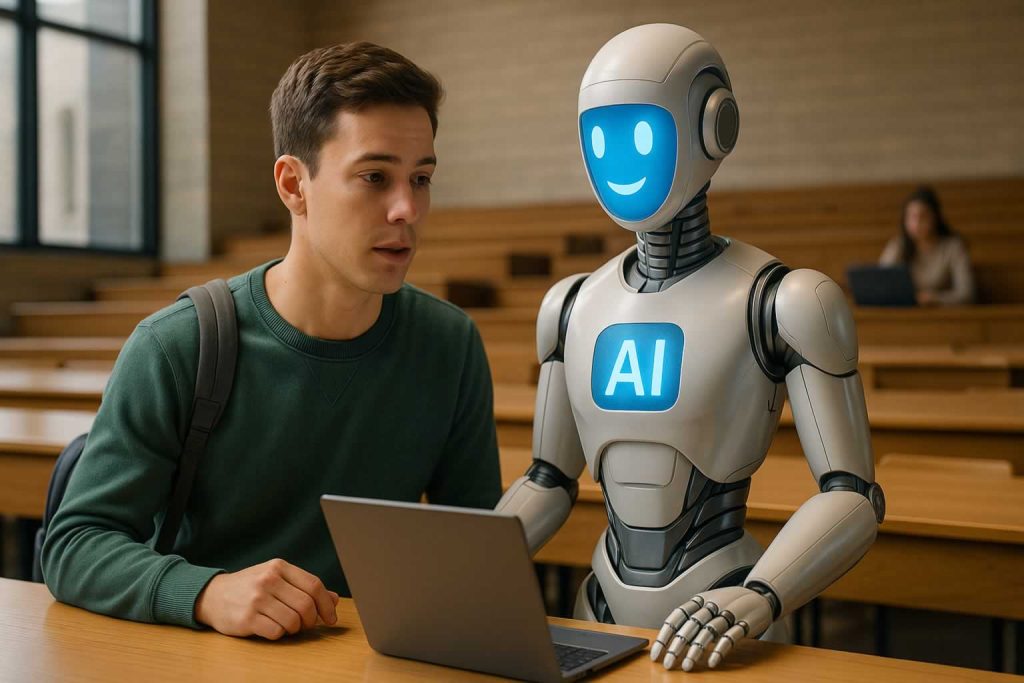
AI that adapts to each learner
AI tutors can provide additional explanation, practice and feedback between classes. The useful pattern is adaptation around observed performance: simplify an example, offer another representation or increase challenge when a learner demonstrates stronger mastery—while teachers remain responsible for the broader learning path.
- Multiple explanation styles: present visual, conversational or voice-supported alternatives when one explanation does not land.
- Knowledge-gap signals: surface recurring errors that may deserve additional teacher attention or targeted practice.
- Adaptive practice: vary difficulty and examples without assuming that a model score fully represents student understanding.
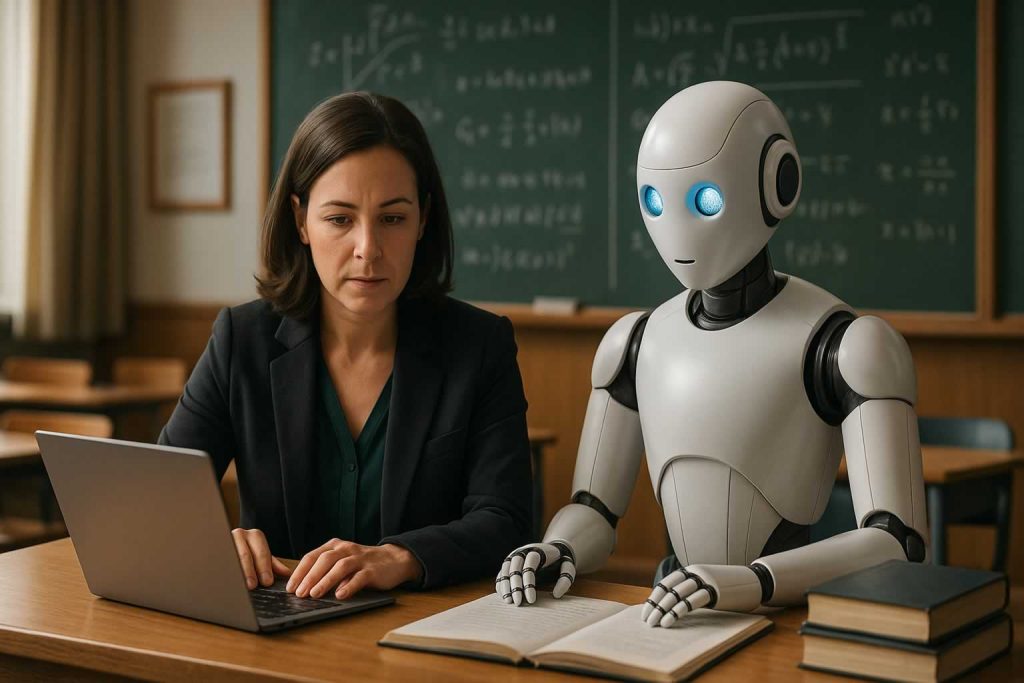
Course creation without the blank page
Instructors can use AI to draft lesson structures, slides, quizzes, discussion prompts and alternative examples from a defined topic or objective. This can accelerate preparation while keeping educators responsible for accuracy, sequencing, relevance and the final instructional design.
- Module drafting: turn learning objectives into structured first-pass lessons and activities.
- Difficulty variants: create simpler or more advanced practice materials for different groups.
- Multilingual support: prepare language variants for review when institutions serve global or multilingual learners.
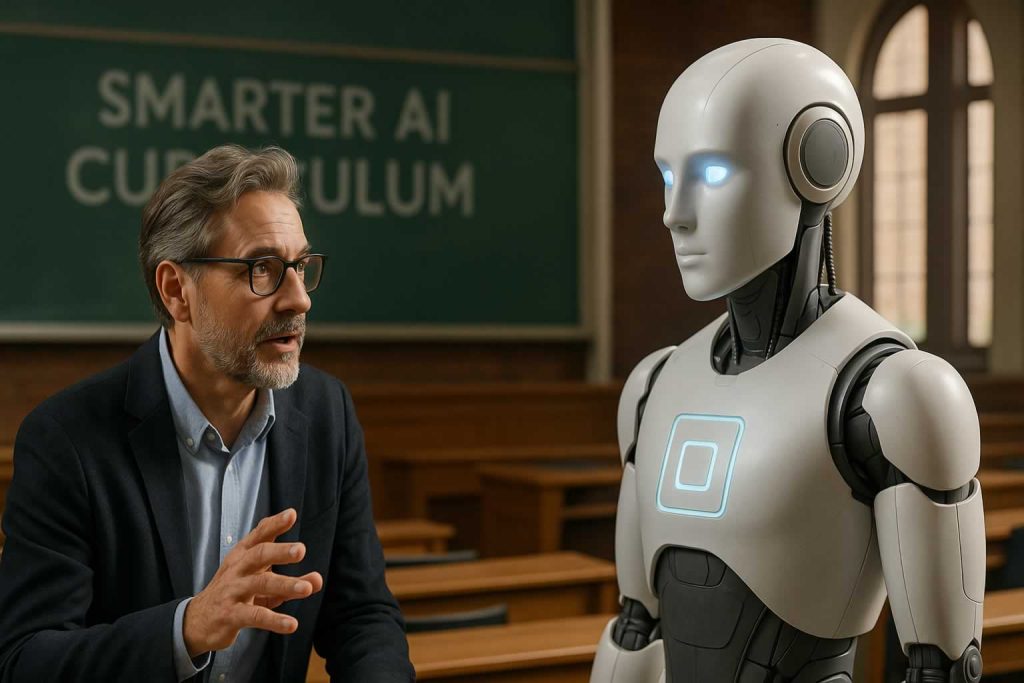
Smarter curriculum support
AI can help compare lessons with selected standards, identify missing topics and suggest interdisciplinary connections. The source page references frameworks such as Common Core and IB; these tools are most useful as planning support, with educators validating alignment and deciding what actually belongs in the learning experience.
- Objective mapping: compare planned content against selected learning objectives or institutional requirements.
- Cross-disciplinary suggestions: propose relevant connections across history, economics, literature, science or workplace scenarios.
- Instructor approval: keep curricular relevance, ethics and sequencing under human control.

Assessment & feedback assistance
AI can help instructors prepare feedback on grammar, structure, argumentation or presentation patterns, but final grading should reflect the assignment, context and educator judgment. Detection tools can also support academic-integrity review, though they should not be treated as infallible proof of plagiarism or AI use.
- Feedback drafting: prepare comments that instructors can edit into meaningful guidance.
- Voice and presentation analysis: surface pronunciation, pacing or delivery signals for practice-based learning.
- Integrity review support: flag material for closer inspection without automatically accusing a learner of misconduct.
Technology supports the teacher
Adapt the material.
Do not automate the relationship.
Education is not simply content delivery. Mentorship, motivation, social learning, critical thinking and context come from people. AI should reduce avoidable workload and create more options for learners without replacing the human judgment that decides what a student actually needs.
Integrate around existing education workflows
Add intelligence to the systems people already use.
Schools, universities and training organizations already operate across learning platforms, student systems, content libraries, assessment tools and internal workflows. Wemaxa can connect AI features around that environment so tutoring, course creation, reporting and learner support become part of a familiar system rather than another isolated dashboard.
Beyond lesson generation
More ways to make learning accessible and responsive.
The source page also highlights immersive learning, workforce training and continuous skill development. These areas can benefit from AI when the technology supports clear learning outcomes rather than adding novelty for its own sake.
Adaptive quizzes
Adjust practice difficulty around learner performance so challenge stays useful without turning assessment into an opaque score.
Learning accessibility
Offer alternate explanation formats, voice support, summarization and adaptable presentation for learners with different needs.
Immersive simulations
Support AR, VR or scenario-based training where spatial or experiential practice adds real instructional value.
Microlearning
Break workplace training into short, targeted lessons that fit into professional schedules and defined development paths.
Certification tracking
Monitor training deadlines and renewal requirements, then route reminders or overdue items through accountable workflows.
Research assistance
Help students and researchers organize large information sets while preserving source checking, methodology and academic integrity.
Education is not an optimization problem
Better tools should create more room for thinking.
The source page repeatedly returns to the same central idea: AI in education should augment teachers rather than replace them. That distinction matters because schools and universities do more than transfer information. They cultivate judgment, discipline, collaboration, curiosity and the ability to reason through uncertainty.
Adaptive learning and automated feedback can be useful, but institutions still need to evaluate whether these systems improve learning rather than simply producing more measurable activity. Poorly governed deployment can push education toward rigid optimization, especially when automated grading or content generation becomes easier to scale than mentorship.
A better implementation treats AI as an instructional tool: pilot it carefully, make evaluation transparent, invite teacher and learner feedback, protect student data and keep the institution responsible for the values embedded in the learning experience.

Explore adjacent implementations
One AI discipline. Different human contexts.
Adaptation, privacy, transparency and human review matter across education and other complex environments. The workflow changes by industry, but responsible AI still depends on understanding where automation helps and where human responsibility must remain explicit.
Have a learning workflow that needs more flexibility?
Tell us where educators, learners or training teams are losing time and which systems are already in place. Wemaxa can help shape an AI-assisted learning environment around your content, instructional goals and existing technology while keeping educator review and learner experience central.