Wemaxa AI for retail & ecommerce
Smarter commerce. More relevant customer journeys.
We help online stores, marketplaces and retail teams integrate multilingual product content, customer support, personalization, inventory intelligence, visual search and checkout automation into the systems they already use. The goal is practical commerce AI: remove repetitive work, make product discovery easier and give teams faster operational signals without turning every customer interaction into an opaque algorithm.
Reduce friction across the shopping journey
Make the store easier to run and easier to shop.
Retail AI works best when it connects customer behavior with the operational systems behind the store. Wemaxa focuses on discoverability, support, merchandising, inventory and workflow automation so useful signals can move from the storefront into the teams responsible for content, service and fulfillment.
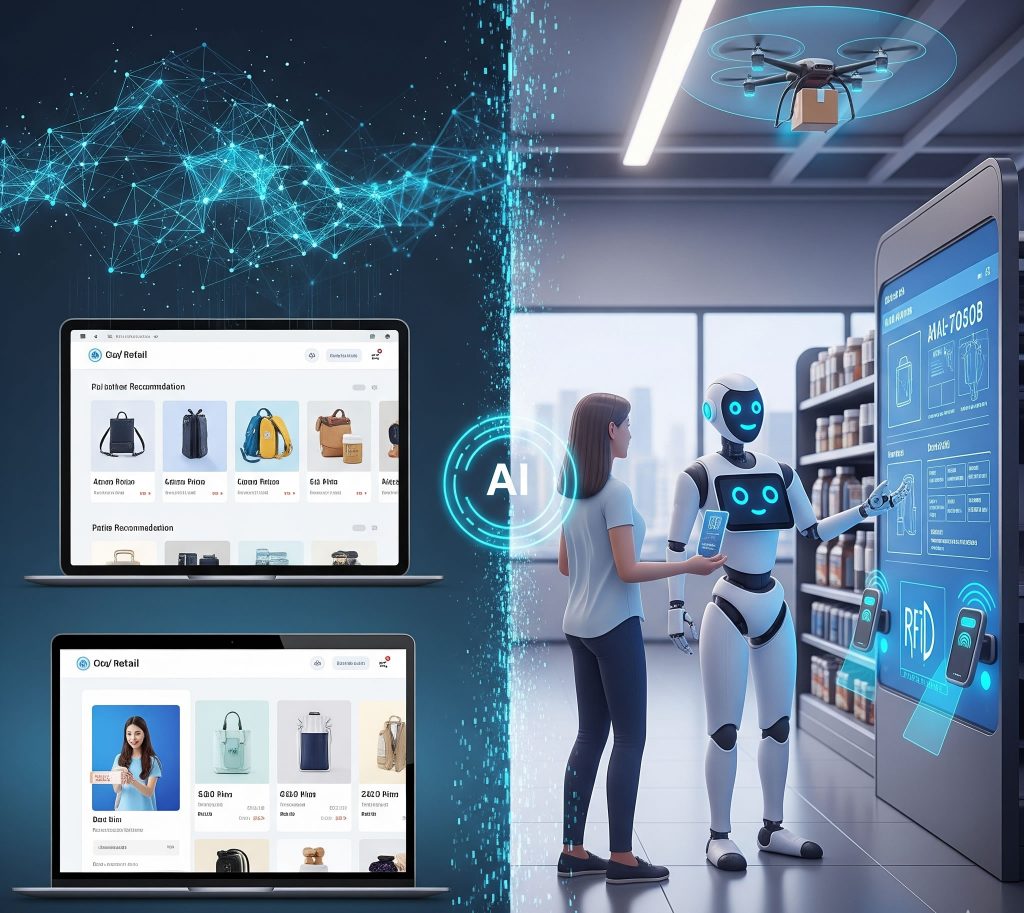
Products in every language
Product descriptions, attributes and campaign variations can be drafted at scale from structured catalog data. Multilingual workflows can adapt tone and terminology for different markets while preserving a review path so merchandising teams remain responsible for accuracy, claims and final publishing.
- Catalog-scale drafting: produce structured first drafts from approved product attributes and source information.
- Localization workflows: prepare language variants while keeping brand tone, measurements and market-specific terminology visible for review.
- Search-friendly structure: organize titles, descriptions and attributes around discoverability without treating generated copy as guaranteed ranking.

24-hour virtual sales support
AI assistants can answer routine questions about products, orders, returns and store policies while helping shoppers narrow choices. When confidence is low or the request becomes sensitive, the system can transfer the conversation and its context to a human agent instead of forcing the shopper through a dead end.
- Order and policy support: retrieve approved information about delivery, returns, availability and common customer questions.
- Guided product discovery: narrow a catalog based on customer-stated needs rather than generic scripted menus.
- Human handoff: preserve context when a sales or support specialist needs to take over.

Personalization that stays useful
Browsing behavior, purchase history and current session signals can help rank products, collections and messages more intelligently. Personalization is most useful when it improves relevance without becoming manipulative or hiding why certain offers, reminders or recommendations appear.
- Recommendation ranking: prioritize products or collections using behavior and product relationships.
- Adaptive merchandising: change selected modules or campaign content around audience and session context.
- Abandonment workflows: trigger reminders or offers under defined rules rather than indiscriminate messaging.
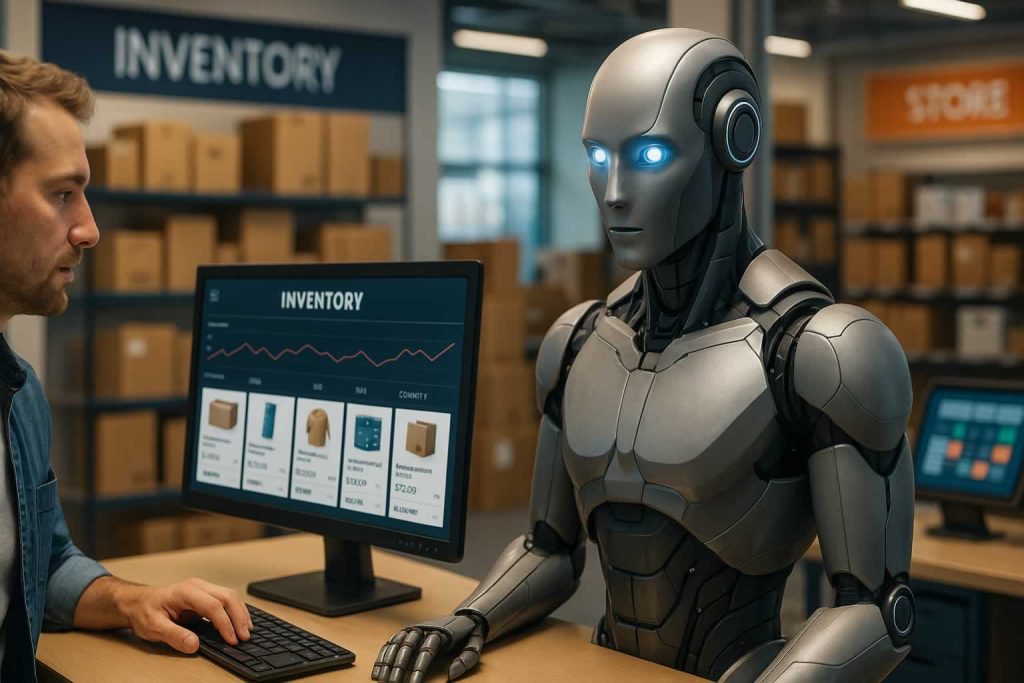
Real-time inventory intelligence
Historical sales, seasonality, campaign activity and current demand can be combined into forecasting signals that help teams prioritize restocking and redistribution. Forecasts should support planners rather than pretend to predict demand perfectly, especially when trends or external events change quickly.
- Demand forecasting: compare sales history with current operating and seasonal signals.
- Stock alerts: surface products approaching configured inventory or availability thresholds.
- Replenishment support: help planners compare expected demand, lead time and stock position before ordering.
Customer signal to operational action
Learn from the journey.
Improve the next one.
Commerce systems generate signals at every step: searches, views, questions, carts, purchases, returns and stock movement. Connecting those signals into one operating loop lets teams improve merchandising and support without relying on disconnected dashboards or one-off automation.

Add intelligence without replacing the store
Integrate with the commerce stack already making sales.
The source page specifically calls out Shopify, WooCommerce, Magento and custom platforms. Wemaxa can connect AI features around the APIs, catalog structures and operational systems already in place, allowing product content, search, support, analytics and inventory workflows to evolve without forcing an unnecessary replatform.
Beyond recommendations
More places where AI can remove retail friction.
Search, checkout, payments and post-purchase operations are all opportunities for useful automation. The strongest implementations connect these features to real product, inventory and customer-service data instead of treating them as isolated AI widgets.
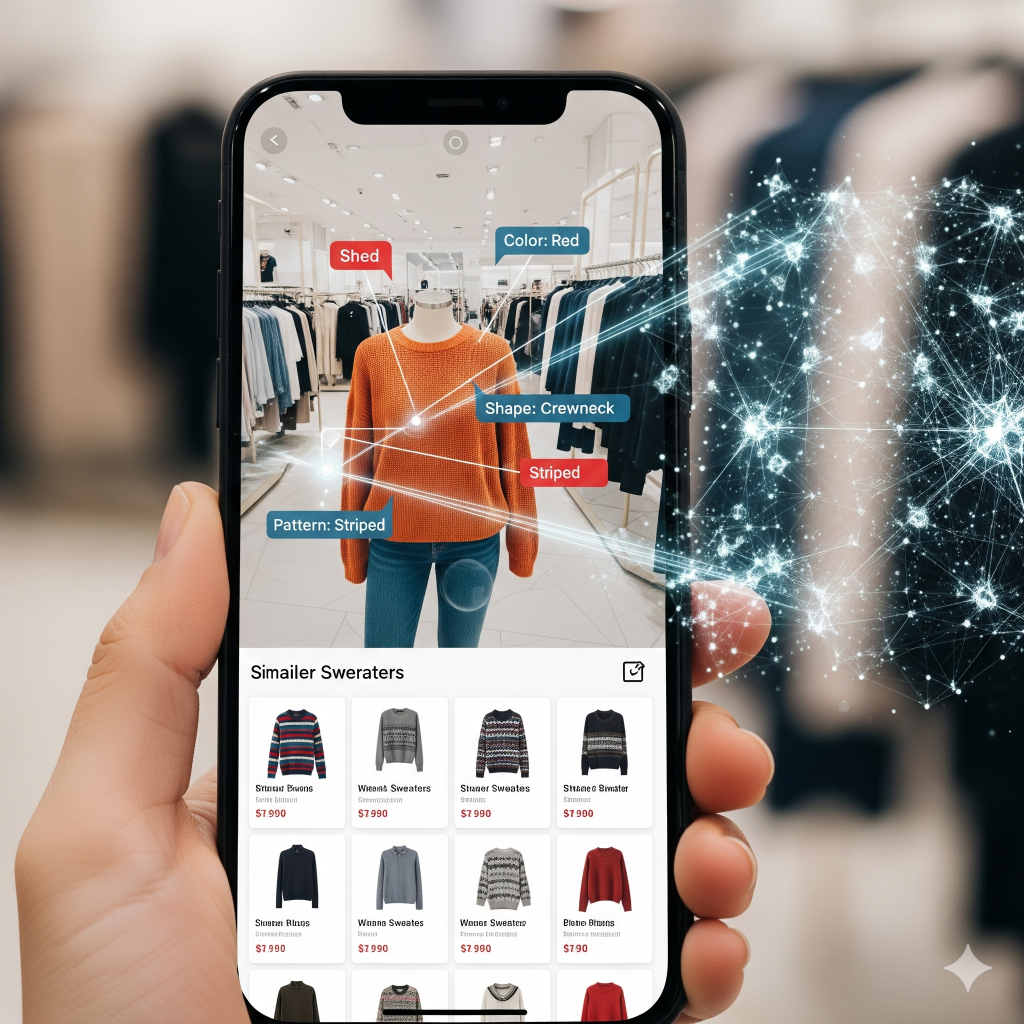
Visual product search
Use image attributes and embeddings to help shoppers find similar products when keywords are not enough.
Voice-assisted discovery
Convert natural-language shopping requests into structured search and recommendation inputs.
Payment anomaly signals
Flag unusual checkout patterns for investigation without treating an automated score as proof of fraud.
Checkout assistance
Surface approved shipping, product or account information at the moment customers are most likely to need it.
Returns intelligence
Group return reasons and product issues so merchandising and support teams can identify recurring patterns.
Pricing support
Compare approved market, margin and inventory inputs to help teams evaluate pricing changes with human control.
Better relevance is not guaranteed revenue
AI can improve the store. It cannot fix a bad offer.
Retail AI is often presented as if personalization or prediction automatically creates growth. In practice, the underlying product, price, availability, customer trust and fulfillment experience still matter more than any algorithm. AI can help teams interpret behavior and remove friction, but it cannot make an irrelevant product compelling.
The source page strongly argues that AI is becoming central to retail operations. The more useful interpretation is that data-driven automation is becoming embedded across merchandising, support, search and inventory. That makes measurement especially important: teams should be able to see whether a recommendation, chatbot, campaign or forecast improved a real customer or operational outcome.
The best commerce systems therefore treat AI as part of the operating stack—not magic on top of it. Useful automation stays connected to product truth, stock truth, customer-service policy and measurable results.
Explore adjacent implementations
One AI discipline. Different customer journeys.
Search, automation, data access and human escalation matter across many industries. The specific user journey changes, but the same design principle remains: AI should connect to the workflow and make a measurable part of it better.
Have a retail workflow that should be more intelligent?
Tell us what platform you use, where customers lose momentum and which operational tasks consume the most time. Wemaxa can help shape an AI-assisted commerce system around your catalog, customer journey and existing retail stack.