Wemaxa AI cloud integration
Ship intelligence. Operate it like production software.
We connect CI/CD, containers, Kubernetes, cloud infrastructure, observability and AI inference into one production delivery system. The goal is not simply to place a model “in the cloud,” but to make intelligent services deployable, measurable, secure and maintainable alongside the rest of your application stack.
Move beyond one-off model deployments
Make AI part of the operating stack.
AI services become much easier to trust when they use the same engineering discipline as the rest of the product. Automated builds, versioned containers, controlled rollout, health monitoring and access policies make it possible to change models or infrastructure without losing operational visibility.
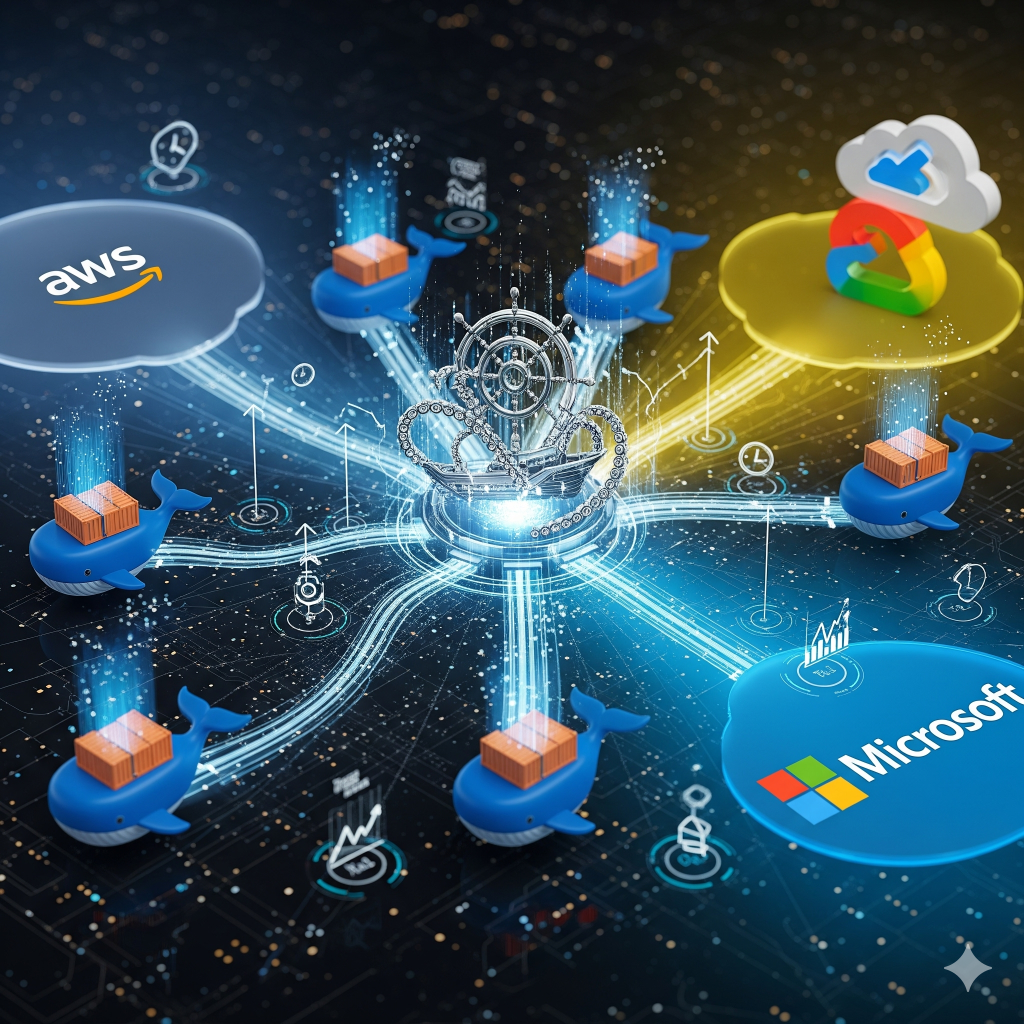
Continuous delivery for AI services
GitHub Actions, GitLab CI and Jenkins can automate the path from code, configuration and model-service changes to repeatable deployment artifacts. Tests, approval gates and promotion rules help prevent faulty releases from reaching production unnoticed.
- Versioned builds: tie deployments to identifiable source, configuration and service versions.
- Automated checks: run application, integration and deployment validation before promotion.
- Controlled rollout: move releases through environments instead of treating production as the first real test.
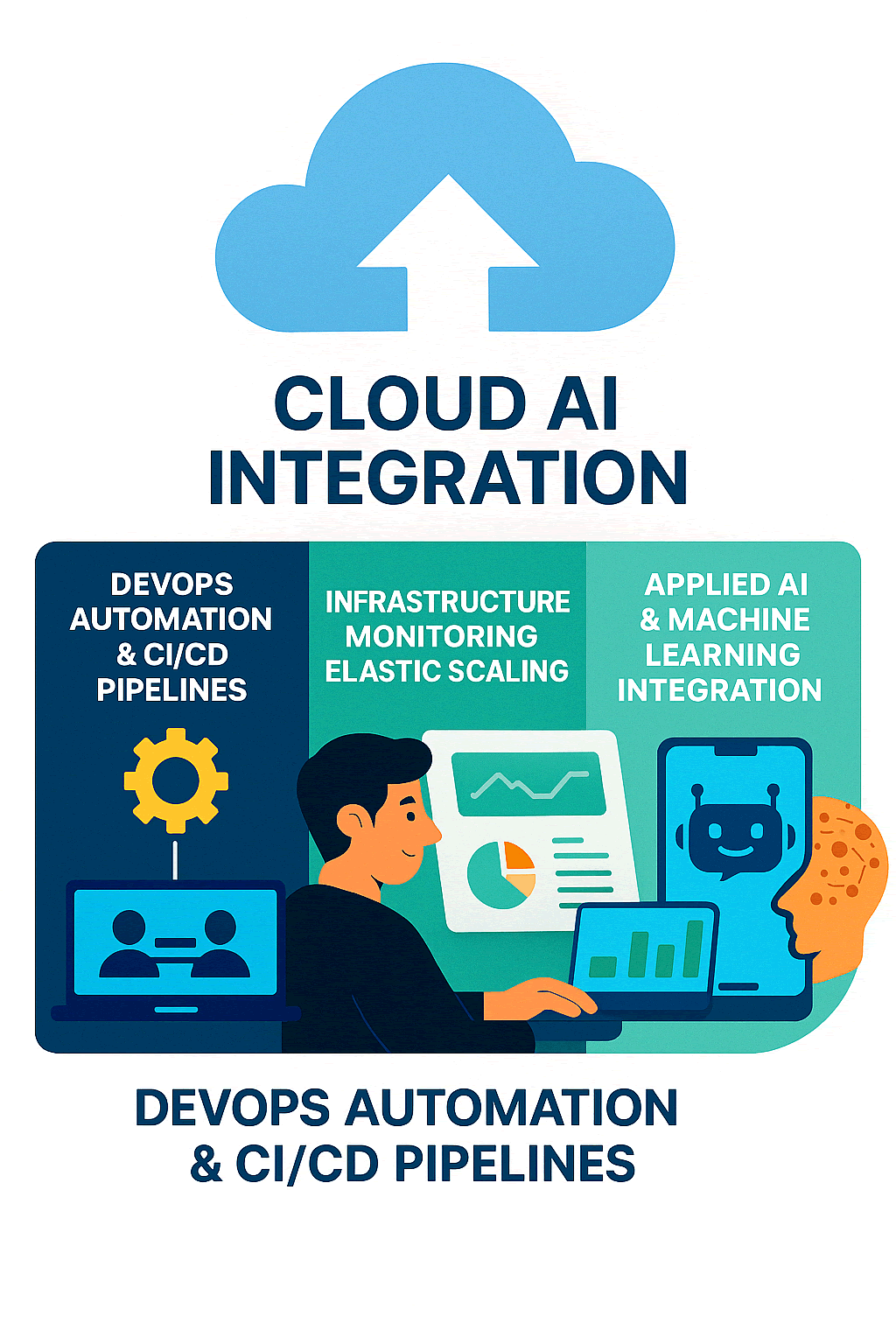
Dockerized workloads & Kubernetes orchestration
Containers give application and inference services a consistent runtime boundary, while Kubernetes can coordinate scheduling, service discovery and rolling deployment where the operating complexity justifies it. The architecture should match the workload: not every AI service needs a large cluster, but production systems benefit from reproducible runtime behavior.
- Container images: package application dependencies and runtime configuration into versioned deployment units.
- Rolling updates: replace service instances progressively instead of taking the entire workload offline for each change.
- Workload scaling: add or remove capacity based on measured demand and infrastructure policy.
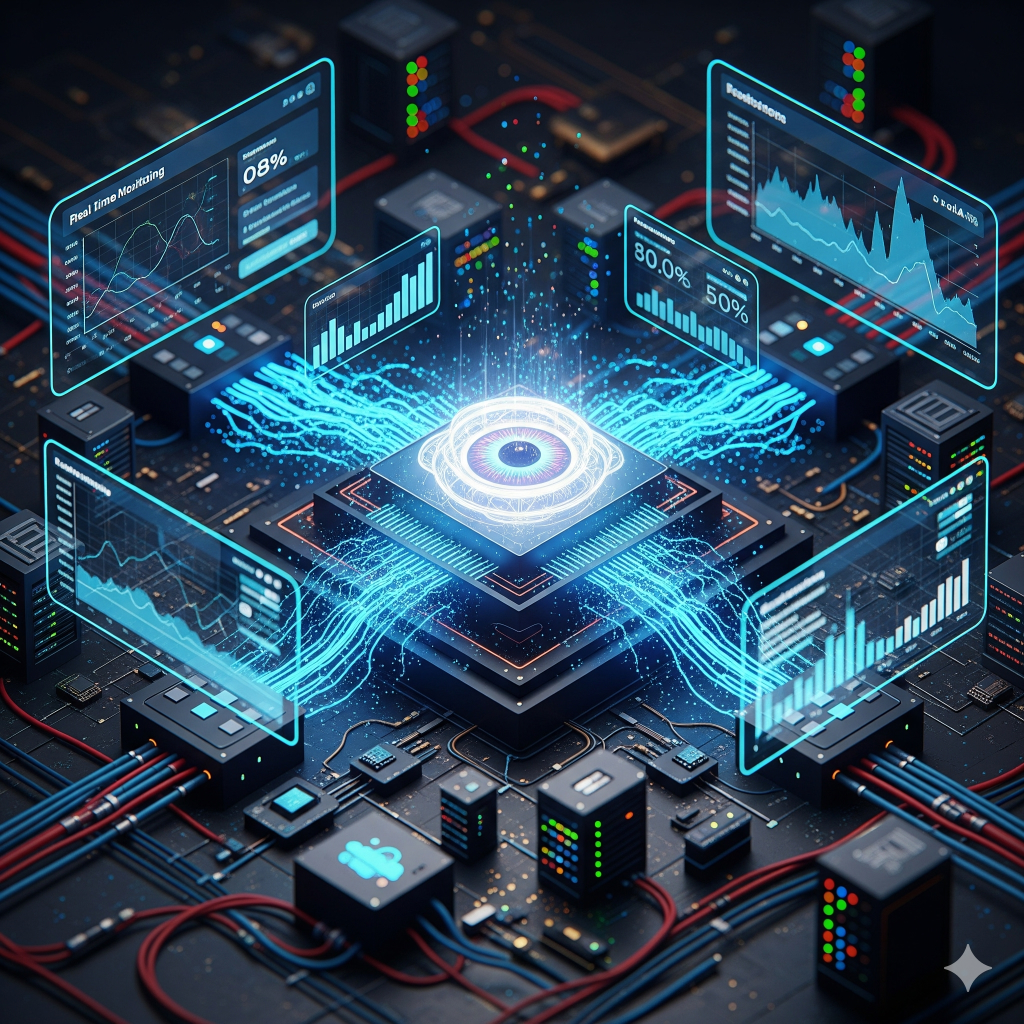
Observability & capacity signals
Prometheus, Grafana and New Relic can expose service health, latency, error rates, resource pressure and usage patterns. That visibility helps teams diagnose failures, understand capacity pressure and create scaling rules from measured behavior instead of assumptions.
- Service health: monitor latency, availability, errors and resource utilization around production endpoints.
- Alerting: route meaningful failures or threshold breaches to the people responsible for the service.
- Scaling inputs: use measured load and saturation signals when defining autoscaling behavior.
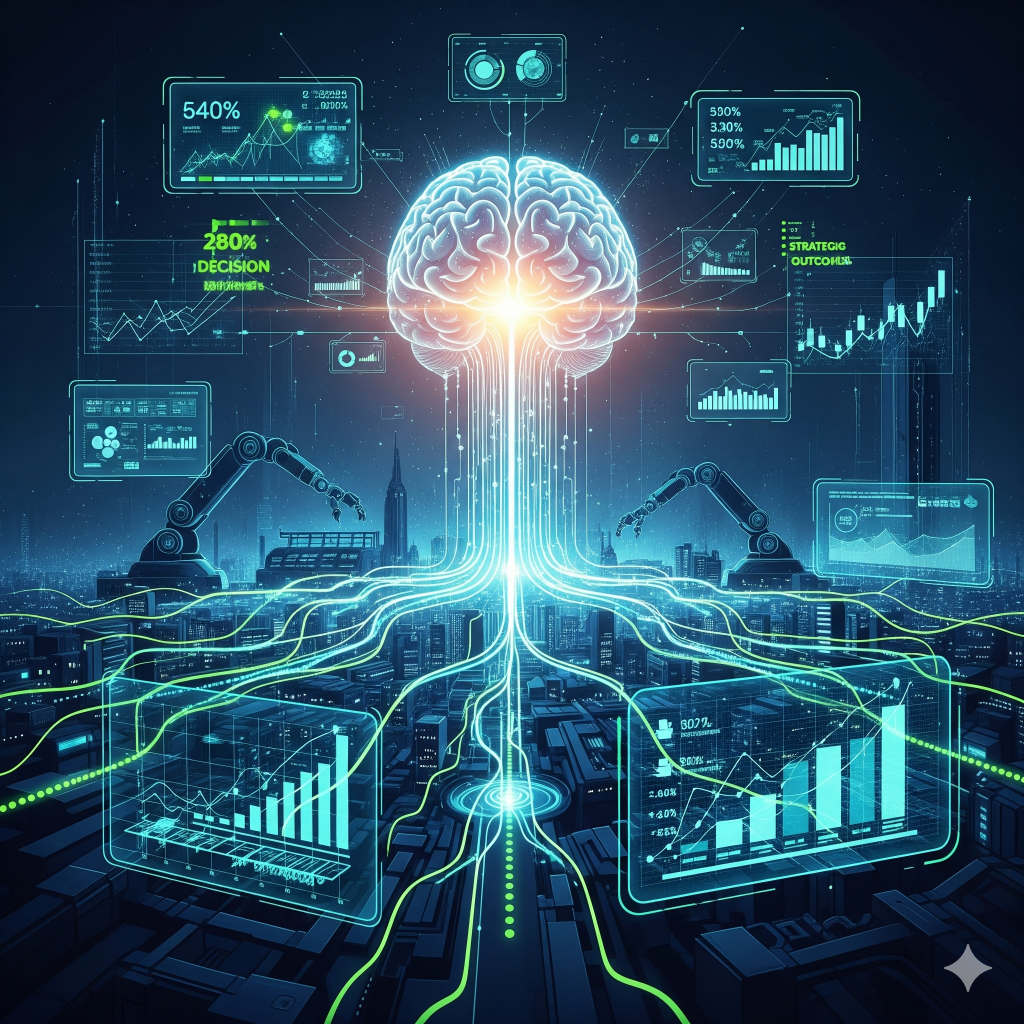
Model & inference service integration
OpenAI APIs, TensorFlow Lite and custom inference services can power assistants, recommendations, vision and predictive workflows. The surrounding application still needs clear service contracts, timeouts, fallback behavior, cost visibility and logging appropriate to the data being processed.
- Inference APIs: isolate model access behind stable application interfaces instead of coupling every feature directly to a provider.
- Fallback behavior: define what the product should do when a model endpoint is slow, unavailable or returns unusable output.
- Usage visibility: measure request volume, latency and cost drivers around AI-powered product features.
Production begins after the model works
Version the change.
Observe what it does.
Cloud AI becomes operational when model behavior, application behavior and infrastructure behavior can be managed together. A production change should have an owner, a deployment path, measurable outcomes and a rollback option. Retraining or replacement should happen under defined controls rather than silently changing a live system with no review.
Multi-cloud is an option, not a default requirement
Use the cloud that fits. Keep the architecture portable where it matters.
AWS, Google Cloud and Microsoft Azure can all support production AI workloads. A single provider is often simpler to operate, while hybrid or multi-cloud architectures can make sense when data location, existing infrastructure, vendor requirements or resilience goals justify the additional complexity.
Infrastructure around the intelligent feature
The model is only one part of the production system.
Cloud AI delivery spans networking, identity, observability, deployment and cost as much as it spans model selection. These supporting layers determine whether an intelligent feature remains dependable after the first successful demo.
Access & secrets
Keep service identities, tokens and sensitive configuration out of source code and scoped to the minimum required access.
Service connectivity
Define how applications, model endpoints, databases and external services communicate across trusted boundaries.
Capacity management
Scale compute from observed load while accounting for startup time, concurrency, GPU availability and cost.
Metrics & tracing
Connect application and infrastructure signals so slow or failing AI features can be diagnosed across service boundaries.
Fallback & rollback
Design for endpoint failure, bad releases and degraded dependencies before those conditions appear in production.
Cost visibility
Track compute, inference and data-transfer drivers so scaling decisions reflect business value as well as technical capacity.
Cloud scale does not remove engineering responsibility
Elastic infrastructure is useful. Unlimited complexity is not.
Production cloud systems still need explicit reliability and model-governance controls. Autoscaling can reduce capacity pressure, but dependencies can fail. Running a model in the cloud does not make its predictions automatically accurate, and retraining can improve some systems while also changing behavior in ways operators did not intend if evaluation and approval controls are weak.
Security and governance need the same practical treatment. Encryption, identity controls, audit logs and data lineage can support compliance programs, but no cloud provider or architecture automatically makes an application compliant with GDPR, CCPA or industry-specific obligations. The organization remains responsible for how data is collected, used, retained and reviewed.
For deeper platform documentation, use Google Cloud AI, AWS Machine Learning, Azure Machine Learning, TensorFlow and PyTorch.
Have an AI service that needs production-grade cloud delivery?
Tell us what is running today, which cloud or deployment constraints matter, and where the current system is difficult to release, scale or observe. Wemaxa can shape the CI/CD, runtime, AI service boundaries and monitoring into one maintainable production architecture.