Wemaxa AI for healthcare
AI that supports care without replacing judgment.
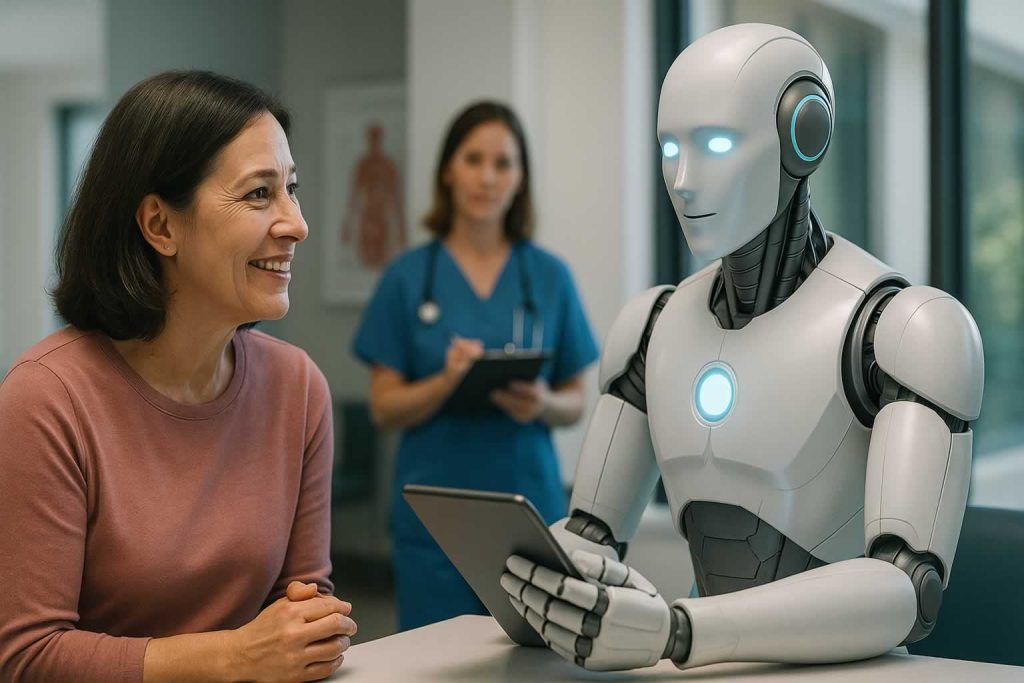
We help clinics, hospitals and healthcare teams integrate patient intake, documentation, communication, scheduling, analytics and workflow automation into the systems they already use. The goal is practical augmentation: reduce repetitive work, surface useful information and improve operational flow while keeping healthcare professionals responsible for clinical decisions.
Automation around the clinical workflow
Reduce friction around care. Keep people in control.
The strongest healthcare use cases are often narrow and operational. AI can help gather information, structure documentation, surface patterns and automate repetitive communication, but those capabilities need clear escalation paths, privacy controls and professional oversight when the outcome could affect a patient.
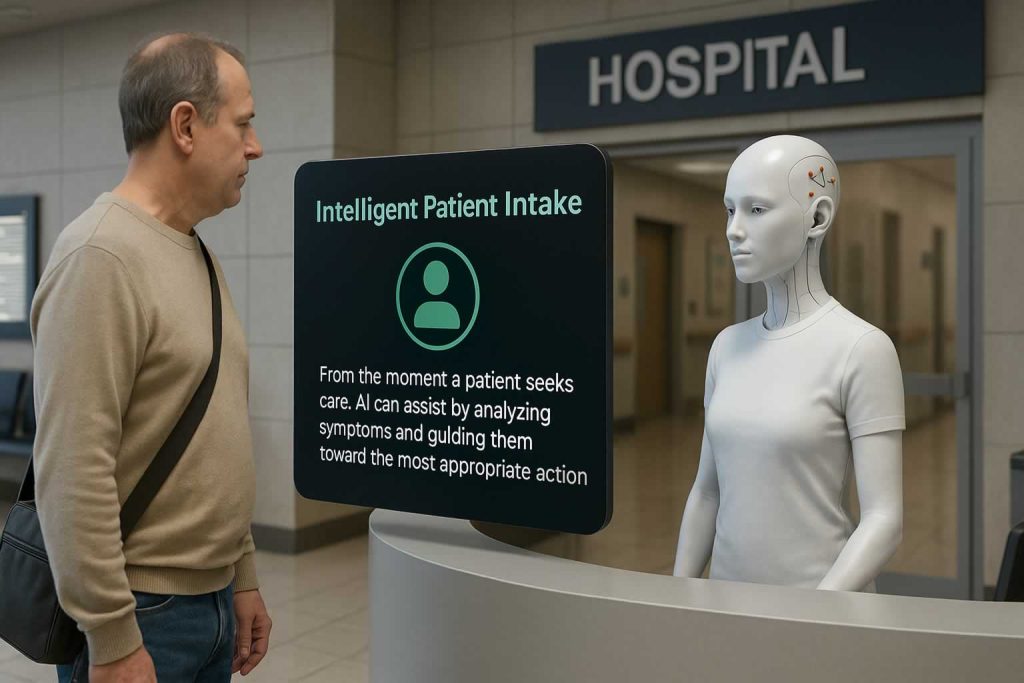
Intelligent patient intake
AI-assisted intake can collect symptoms, history and visit context before a patient reaches the front desk or clinician. Structured questions can help route routine requests, identify when escalation is appropriate and reduce repeated data entry while leaving clinical assessment to qualified professionals.

Documentation assistance
Conversations and dictated notes can be transformed into structured drafts that follow formats such as SOAP. The useful pattern is assistance, not autonomous record creation: clinicians remain responsible for reviewing, correcting and approving documentation before it becomes part of the medical record.
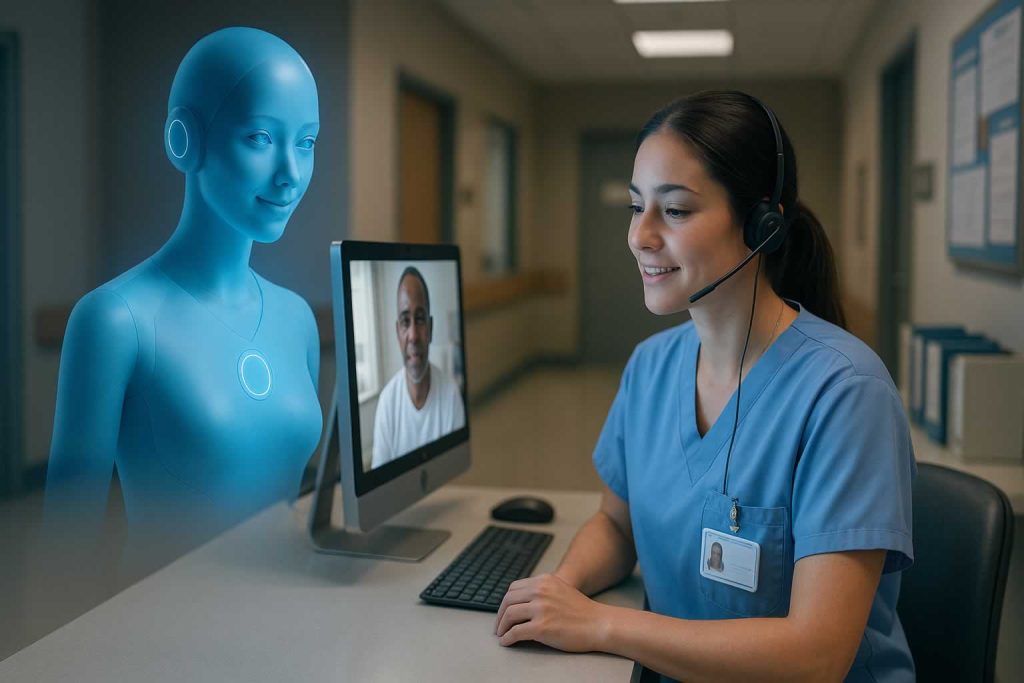
24/7 patient communication
Patient-facing assistants can handle routine questions about office logistics, scheduling and approved instructions while routing sensitive or uncertain requests to staff. This can reduce repetitive callbacks and give patients a clearer path to the right human contact when automation should stop.
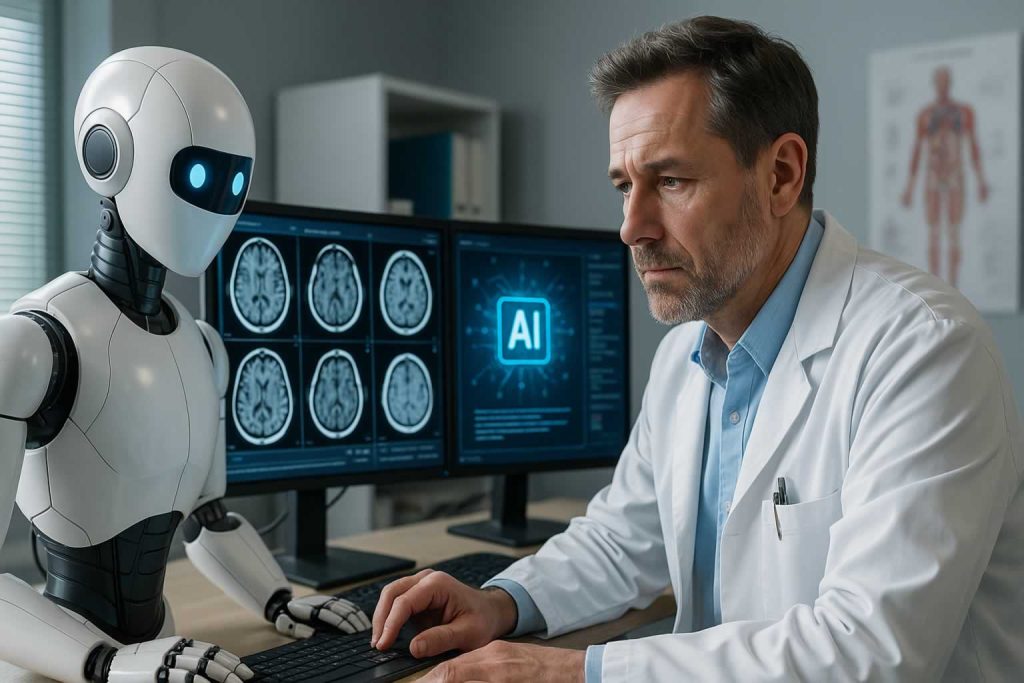
Diagnostic support
Models can help surface patterns across imaging, laboratory values and records, but they should be treated as decision-support tools rather than independent diagnosticians. The purpose is to make relevant information easier to review while keeping responsibility and final clinical judgment with the healthcare professional.
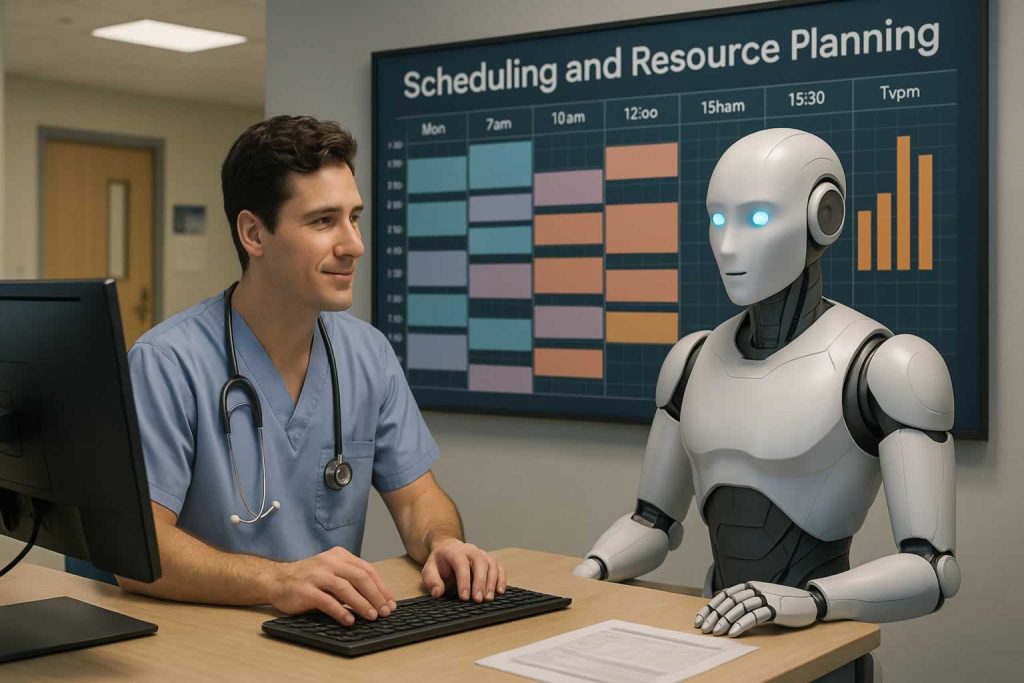
Predictive scheduling
Historical demand can be used to estimate likely appointment volume, no-show patterns and staffing pressure. Used carefully, those forecasts can help healthcare teams plan capacity and reduce waiting without treating an algorithmic prediction as certainty.
Patient engagement
Approved care instructions, reminders and follow-up messages can be adapted around patient context and preferences. This can support adherence and continuity while preserving clear boundaries between automated communication and advice that requires a clinician.
Human judgment stays central
Useful automation.
Clear boundaries.
Healthcare AI can influence sensitive decisions, which means convenience cannot be the only design goal. Systems should make it obvious when a human must review an output, how patient data is accessed, what is logged and how failures or questionable responses are escalated.

Fit the workflow instead of replacing it
Integrate around the clinic, not against it.
Healthcare teams already work across scheduling systems, records, messaging, billing and internal procedures. New AI is easier to adopt when it appears inside those existing paths instead of forcing staff into another disconnected dashboard. Wemaxa focuses on modular integration so useful automation can be introduced gradually and adapted to the scale of a private clinic, urgent-care setting or larger organization.
Beyond the first workflow
More places where AI can reduce operational load.
Not every useful healthcare application is clinical. Many of the most practical opportunities sit in administration, records, communication and infrastructure—areas where automation can reduce repetitive work without pretending to replace professional medical expertise.
Remote patient monitoring
Surface changes in connected-device or self-reported data so staff can prioritize review and follow-up.
Billing & claims assistance
Extract structured information, check documentation completeness and reduce repetitive administrative handling.
Document digitization
Convert scanned forms and handwritten material into searchable records with review before final acceptance.
Patient feedback analysis
Group recurring themes and sentiment across surveys or messages to surface service-quality patterns.
Equipment maintenance signals
Combine IoT and service data to identify patterns that may justify inspection before equipment failure.
Fraud & anomaly detection
Flag unusual transaction or billing patterns for human investigation rather than automatic accusation.
Augmentation, not replacement
Healthcare AI is powerful because it is narrow.
Current healthcare AI is better understood as a set of specialized statistical and automation tools than as a replacement for doctors, nurses or administrators. Medical imaging, predictive analytics, transcription, scheduling and research can benefit from pattern recognition and speed, but reliability varies by task and mistakes can carry serious consequences.
That is why responsible deployment has to account for bias, security, accountability and the limits of the data used to train or operate a model. Institutions still need scientific rigor, professional judgment and appropriate oversight. Guidance and regulatory work from organizations such as the FDA illustrates why AI-enabled medical software needs more scrutiny than ordinary automation.
The practical opportunity is not a fully autonomous clinic. It is a healthcare environment where repetitive tasks consume less staff time, relevant information is easier to surface and professionals have better tools for managing increasingly complex workflows.

Explore adjacent implementations
One AI discipline. Different operating environments.
The same principles—controlled data access, measurable automation, human review and dependable integration—apply across other regulated or workflow-heavy industries, even though the exact risk, governance and user requirements change.
Have a healthcare workflow that could use less manual friction?
Tell us where staff lose time, which systems are involved and where human review must remain mandatory. Wemaxa can help shape a practical AI integration around the workflow rather than forcing the workflow around the technology.