Wemaxa web design services
Design the brand. Build the experience around it.
We design websites as owned digital platforms not disposable templates. Strategy, brand expression, responsive UX, content structure, performance, accessibility and the systems behind the site are planned together so your web presence can communicate clearly, operate reliably and continue evolving after launch.
More than a visual refresh
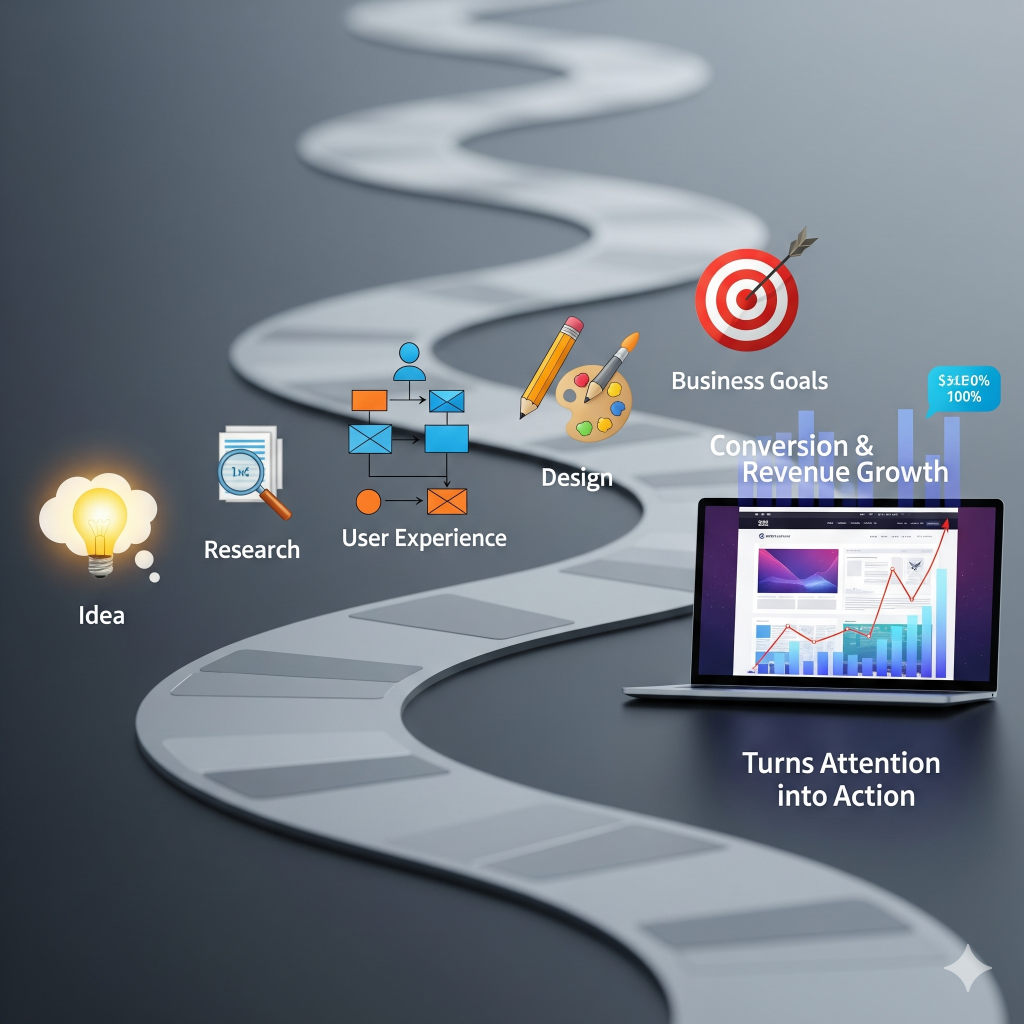
A website should turn attention into action
A complete web design service begins before the first polished screen. We connect business goals, audience intent, brand language, information architecture and technical reality so the final interface is not simply attractive it has a reason for every major decision and a structure your team can continue using.

Brand systems that work on screen
Your website should feel recognizably yours before the visitor reads every word. We translate brand personality into practical typography, color, spacing, imagery and interface rules that remain consistent across pages, campaigns and future additions. Logo work can also be developed or refined so the identity remains usable from a small mobile header to larger marketing applications.
- Visual language: define reusable decisions for typography, spacing, color and imagery rather than styling pages independently.
- Logo and identity support: create or refine assets that remain legible, flexible and recognizable across common digital contexts.
- Brand consistency: keep calls to action, imagery and layout aligned with the personality customers should remember.
User journeys with clear intent
Discovery turns vague requirements into a usable plan. Audience questions, competitor patterns, analytics and business priorities inform navigation and page hierarchy. From there, interface patterns are designed to reduce friction and help users understand where they are, what matters and what action makes sense next.
- Information architecture: organize content around user intent instead of internal company structure.
- Responsive prototyping: test hierarchy and interaction across desktop, tablet and mobile before polishing every detail.
- Usability principles: favor repeatable patterns, visible system states and clear actions over decorative novelty.

Responsive frontend without the weight
Frontend implementation gives the visual system its real behavior. Components need to stay predictable across viewports, motion should explain state rather than distract from it, and performance should be considered part of the user experience. Fonts, images and scripts are handled with the same care as typography and layout.
- Reusable components: create consistent page building blocks instead of one-off layouts that drift over time.
- Responsive behavior: make content reflow deliberately rather than simply shrinking desktop composition.
- Performance-aware media: use appropriate image sizing, loading behavior and script discipline around real devices.

A website that can keep evolving
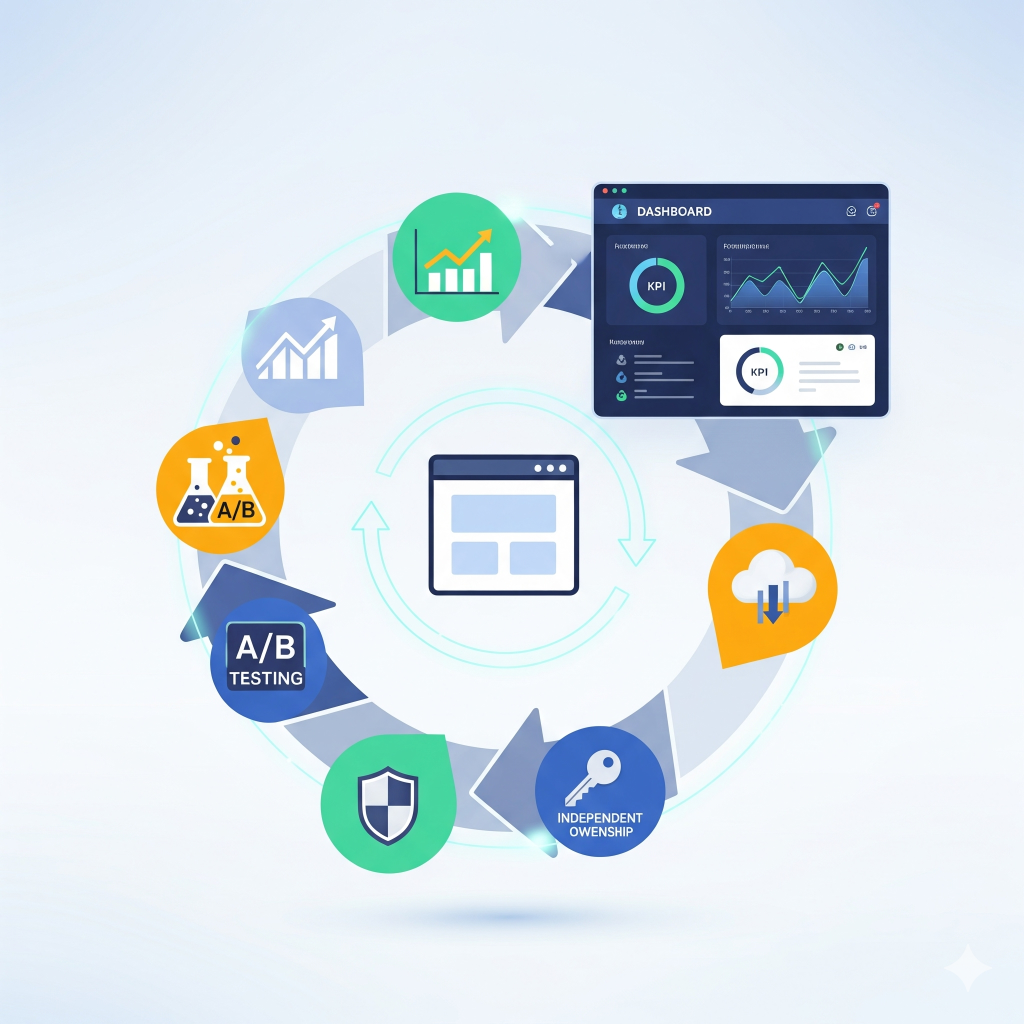
Launch should create a foundation, not a dead end. Analytics, content workflows, maintenance and modular structure make it possible to learn from real use and continue improving. That can mean adding campaigns, newsletters, booking flows, ecommerce or new content without rebuilding the entire site every time the business changes.
- Meaningful analytics: define events around real business goals rather than collecting metrics with no decision attached.
- Maintainable structure: keep dependencies, backups and content workflows understandable after launch.
- Platform ownership: preserve the ability to change content, publish improvements and reduce dependence on any single external social platform.
From uncertainty to a maintainable site
Discover first.
Design with evidence.
The original page correctly treats design as a sequence of connected decisions rather than a single visual exercise. Discovery clarifies what the site needs to accomplish, design language turns that direction into reusable rules, implementation tests those ideas against real devices, and measurement shows what deserves the next iteration.
The visible page is only one layer
Great design connects message, behavior and implementation.
The source page describes a complete service as research, UX, visual direction, content strategy, performance and operational details working together. That is the right frame: the deliverable is not simply a beautiful page, but a system capable of earning attention and helping the visitor understand what to do next.
The details that make a site feel complete
Every layer should support the experience.
The original page spans discovery, frontend quality, backend reliability, content, accessibility and measurement. Those are not separate extras. Together they define whether a website remains understandable, usable and maintainable once real visitors, editors and business systems begin depending on it.
Discovery & research
Interviews, analytics and competitor context clarify audience needs and where the current experience is losing momentum.
Information & messaging
Headlines, page structure and calls to action are designed around what visitors need to understand before they can act.
Responsive interaction
Layouts, motion and components are tested across viewport sizes with emphasis on clarity, continuity and performance.
Backend & integrations
CMS workflows, ecommerce, analytics and external services are structured so the website remains reliable under real use.
Accessibility baseline
Contrast, keyboard navigation, focus states, semantic structure and clear error handling improve usability for more people.
Measurement & maintenance
Analytics, backups, updates and defined ownership keep the site measurable and maintainable after the initial launch.

Social reach is useful. Ownership is different.
Build a place the audience can return to.
The original page opens with one of its strongest ideas: Facebook, Instagram, TikTok and YouTube are valuable channels, but they are still third-party platforms. Algorithms, reach and account access can change. A website gives creators, consultants, professionals and businesses a stable destination where the brand controls the structure, message, calls to action and customer journey.
Requirements before trends
Choose the platform for the job it needs to do.
Platform choice should follow operating requirements rather than fashion. Publishing-heavy websites benefit from mature content tools. Complex catalogs need dependable commerce infrastructure. Headless architecture can make sense when a team has the development capacity to operate it; simpler integrated systems are often better when the business values straightforward publishing and maintenance.
The same principle applies after launch. Analytics should measure actions that matter, accessibility should be treated as a baseline, and maintenance should keep dependencies, backups and vulnerabilities under control. A website is healthiest when ownership is practical: the team can publish, measure and improve without being trapped by the original build.
For deeper fundamentals, the original page points readers toward resources such as Google’s SEO Starter Guide, Nielsen Norman Group’s usability heuristics, W3C accessibility guidance, MDN and web.dev.
Need a website as strong as your business?
Tell us what the site needs to communicate, what visitors should be able to do and where the current experience is falling short. Wemaxa can shape the strategy, identity, interface, content structure and technical foundation into one coherent web design system.