Wemaxa full-stack website design
One product. Every layer engineered together.
We design and build websites as complete systems: interface, frontend, application logic, APIs, authentication, databases, performance and deployment planned together from the start. That removes the artificial divide between “design” and “development” and produces digital products where the experience customers see is supported by architecture that can actually sustain it.
Design decisions meet engineering reality
Stop handing the product between disconnected silos.
A beautiful interface that the backend cannot support is a design failure. A technically sound platform that customers struggle to use is an engineering failure. Full-stack delivery treats both as one product problem, connecting experience, performance, data and infrastructure before implementation decisions become expensive to reverse.

Interface design & frontend systems
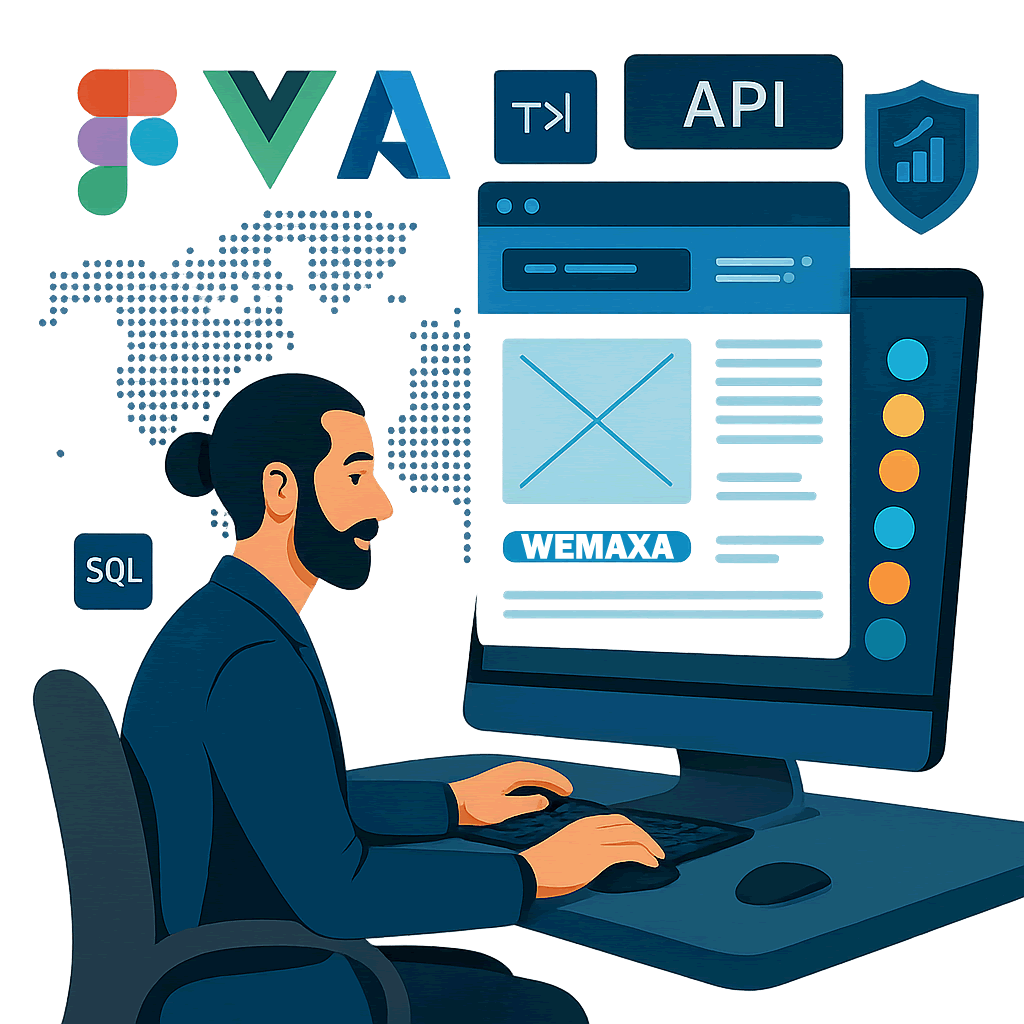
Full-stack projects begin with information architecture, user flows and collaborative prototyping before those decisions become reusable frontend components. Figma, Framer and Adobe XD can support prototyping, while React, Vue or Angular can power component-based interfaces where the product benefits from application-style behavior.
- Responsive design systems: reusable patterns keep pages and application states consistent as the product expands.
- Component-driven implementation: frontend structure is built around maintainability instead of one-off page styling.
- Conversion-aware UX: navigation, hierarchy and interaction are shaped around what users actually need to accomplish.
Backend services & data architecture
The server layer handles the rules and data the interface depends on. Depending on project requirements, that can include Node.js, Express, NestJS or Django with PostgreSQL, MySQL or managed data services. The objective is not technology for its own sake, but a backend that stays understandable as integrations and product requirements grow.
- Structured business logic: keep application rules separate enough to test, maintain and evolve.
- Database planning: choose storage and access patterns around the workload, data relationships and operational needs.
- Third-party integration: connect payments, CRM, analytics, content or business systems through stable interfaces.
APIs, authentication & permissions
REST or GraphQL APIs can provide clear boundaries between frontend applications, internal services and external integrations. Authentication and authorization are planned alongside those interfaces using appropriate session, OAuth2, JWT and role-based access patterns so the product knows who can access which capabilities.
- Stable service contracts: define predictable inputs and outputs between application layers.
- Role-based access: model permissions around actual user and administrative responsibilities.
- Integration boundaries: keep external systems from becoming tightly coupled to every part of the application.
Performance & production delivery
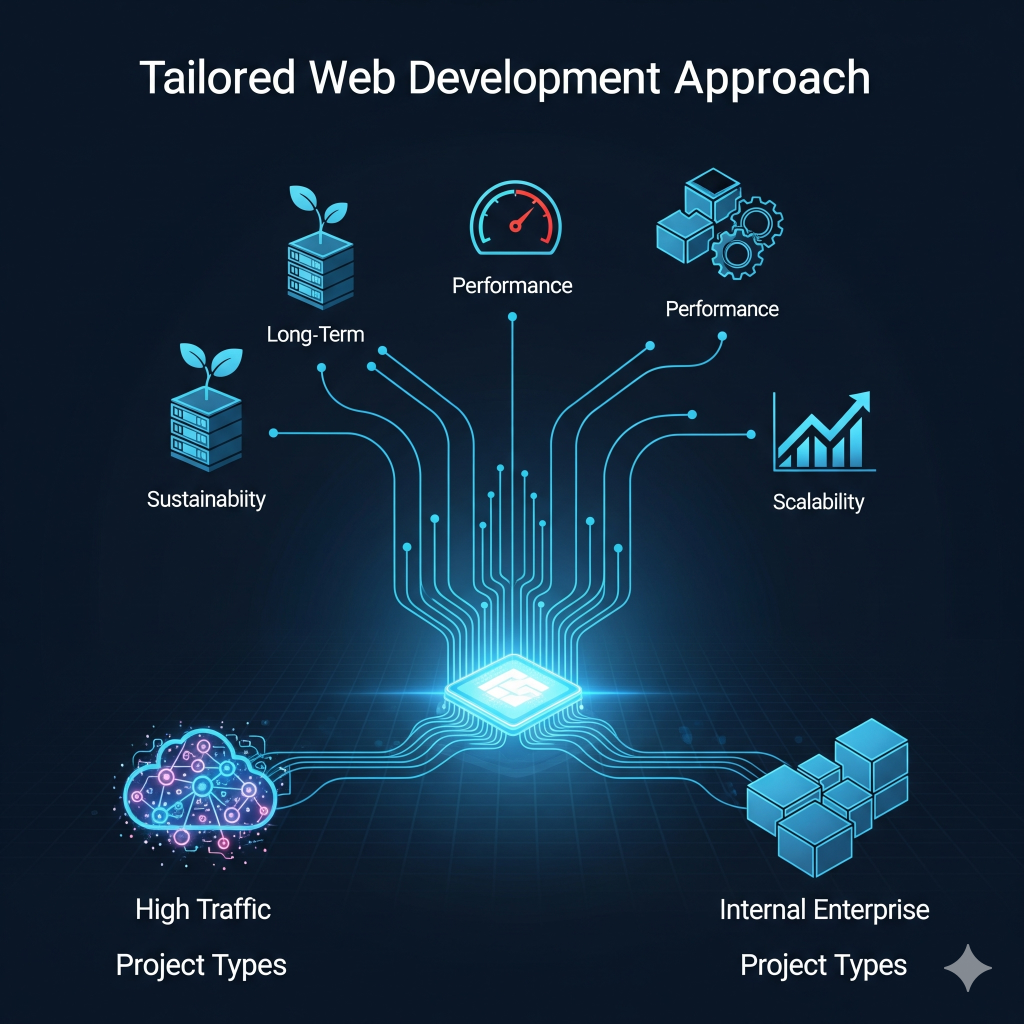
Load balancing, caching, CDN delivery and deployment strategy influence how quickly and reliably a site behaves under real traffic. We plan those concerns with the application rather than waiting until launch to discover that the product needs an entirely different delivery model.
- Caching strategy: reduce unnecessary computation and repeated data delivery where appropriate.
- Global content delivery: move static and cacheable assets closer to users through edge/CDN infrastructure.
- Operational visibility: keep deployments, errors and performance measurable after the product goes live.
One decision affects the next layer
Designed as a product.
Built as a system.
Full-stack work is valuable because architectural and design decisions can be evaluated together. A visual interaction may require a different data model. A permission rule may change the interface. A performance requirement may influence how content is loaded. Treating those decisions as one system reduces late-stage compromise.
The site is one continuous experience
Beauty and durability have to ship together.
Separating frontend aesthetics from backend functionality too aggressively creates avoidable failures. Customers experience the complete product, not the organizational chart behind it. Design, server logic, database behavior and infrastructure all contribute to whether a website feels fast, coherent and trustworthy.
Select technology around the product
Modern tools. Clear architectural roles.
A modern full-stack stack can include design tools, component frameworks, backend services, relational or document databases, APIs, authentication and delivery infrastructure. We use each technology where its strengths match the product behavior, integration requirements, team context and expected operating load.
Prototype & UX
Collaborative wireframes, flows and visual systems define the product before deeper implementation begins.
Application interface
Component-based frontends support reusable behavior, responsive layouts and application-style interactions.
Application services
Backend frameworks organize business rules, integrations and server-side workloads into maintainable services.
Persistence layer
Database selection follows data relationships, consistency requirements, access patterns and expected scale.
Service boundaries
APIs, authentication and permissions define how users, frontends and external services access capabilities safely.
Performance infrastructure
CDN delivery, caching and load distribution help keep production systems responsive as traffic and geography change.
Where full-stack ownership matters most
Products where interface and infrastructure cannot drift apart.
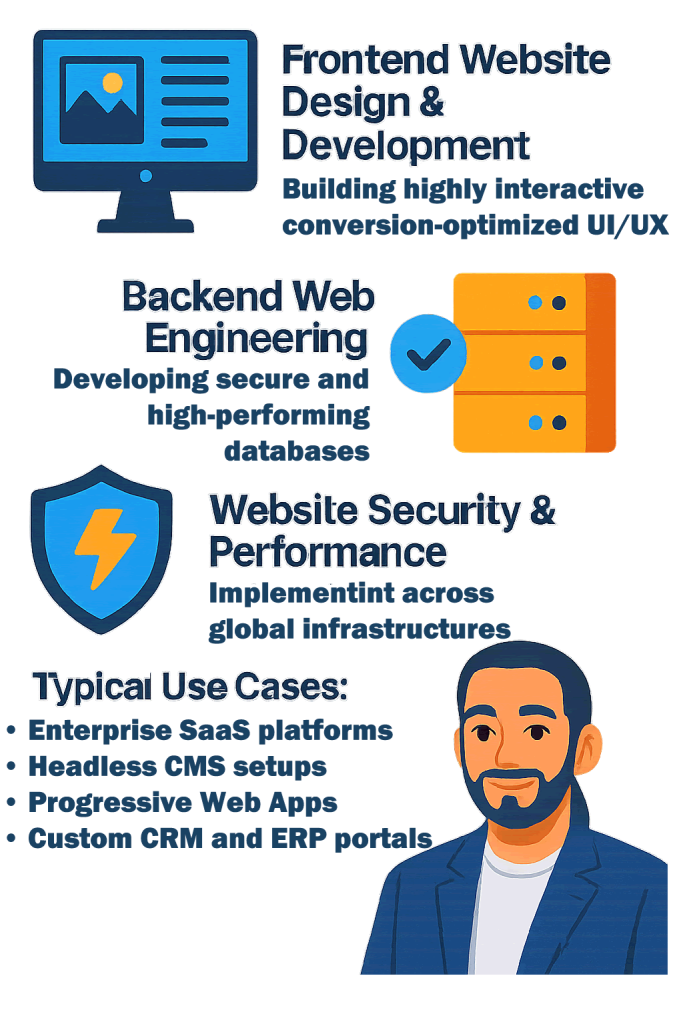
Full-stack delivery is especially valuable for complex platforms rather than brochure-only sites. These are products where user experience, permissions, integrations, data and production reliability all influence whether the system actually works.
Enterprise SaaS
Role-based applications with dashboards, workflows, billing, integrations and operational requirements that evolve over time.
Headless CMS websites
Frontend experiences separated from content management where APIs and caching become part of the publishing architecture.
Progressive web apps
Web applications that need responsive interaction, offline-aware behavior and app-like product flows across devices.
Custom CRM & ERP
Internal systems where business rules, permissions, data and workflow design must be coordinated around real operations.
Full-stack is not a technology checklist
The value is coherence.
The value of full-stack delivery is accountability across the complete product. It is not about one person personally writing every CSS rule, API endpoint and database query. It is about treating the website as one continuous system and evaluating decisions at each layer against their effect on the others.
That mindset prevents common failures: visual concepts that cannot be implemented cleanly, backend features hidden behind confusing workflows, data models that make simple interactions expensive, or late performance fixes that require architectural rework.
A successful full-stack product therefore balances usability with durability. The user experiences one website; the engineering process should be organized around delivering that same sense of coherence.

Need the entire product to work as one system?
Tell us what users need to do, which systems must connect and how the product is expected to grow. Wemaxa can help shape the interface, application architecture, integrations, data and deployment as one accountable full-stack delivery path.