Wemaxa brand architecture
Make every brand relationship clear before the portfolio grows.
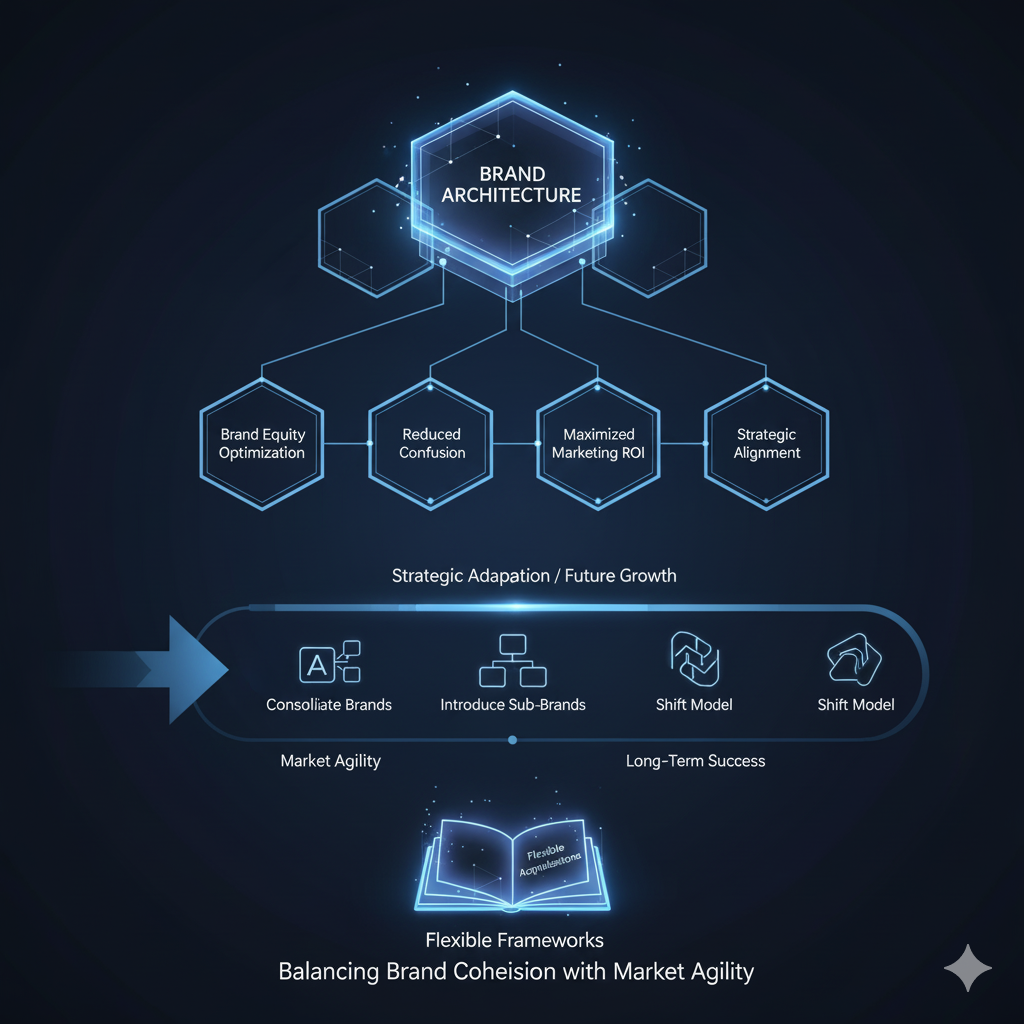
Brand architecture defines which name leads, which brands stand independently, where endorsement appears, how products are grouped and how the portfolio expands without creating avoidable confusion. It turns a collection of offers into a system customers and internal teams can understand.
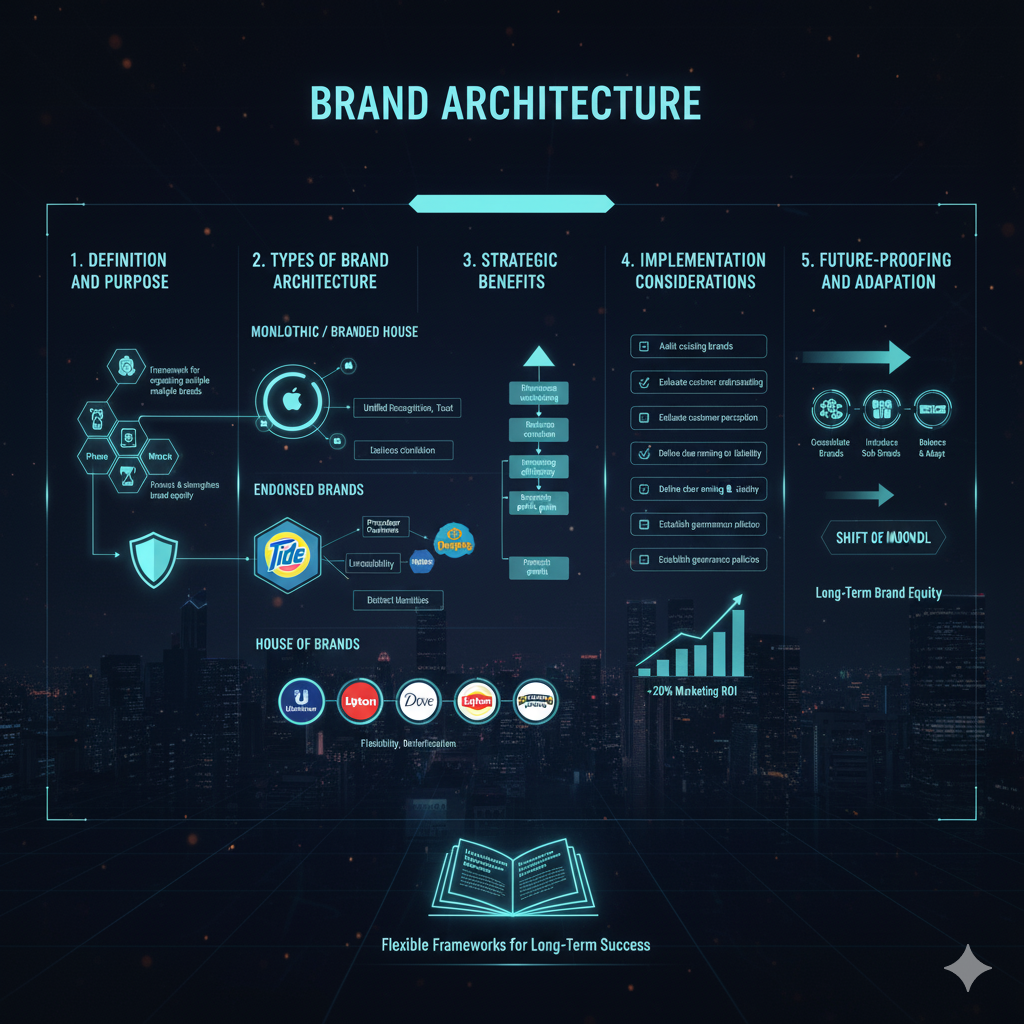
Choose how much equity should be shared
One master brand, visible endorsement, or independent brands.
The right structure depends on how closely the offers are related, how much reputation should transfer between them, and whether different audiences need clearly separate positioning. Architecture is a strategic relationship system—not simply a naming convention.

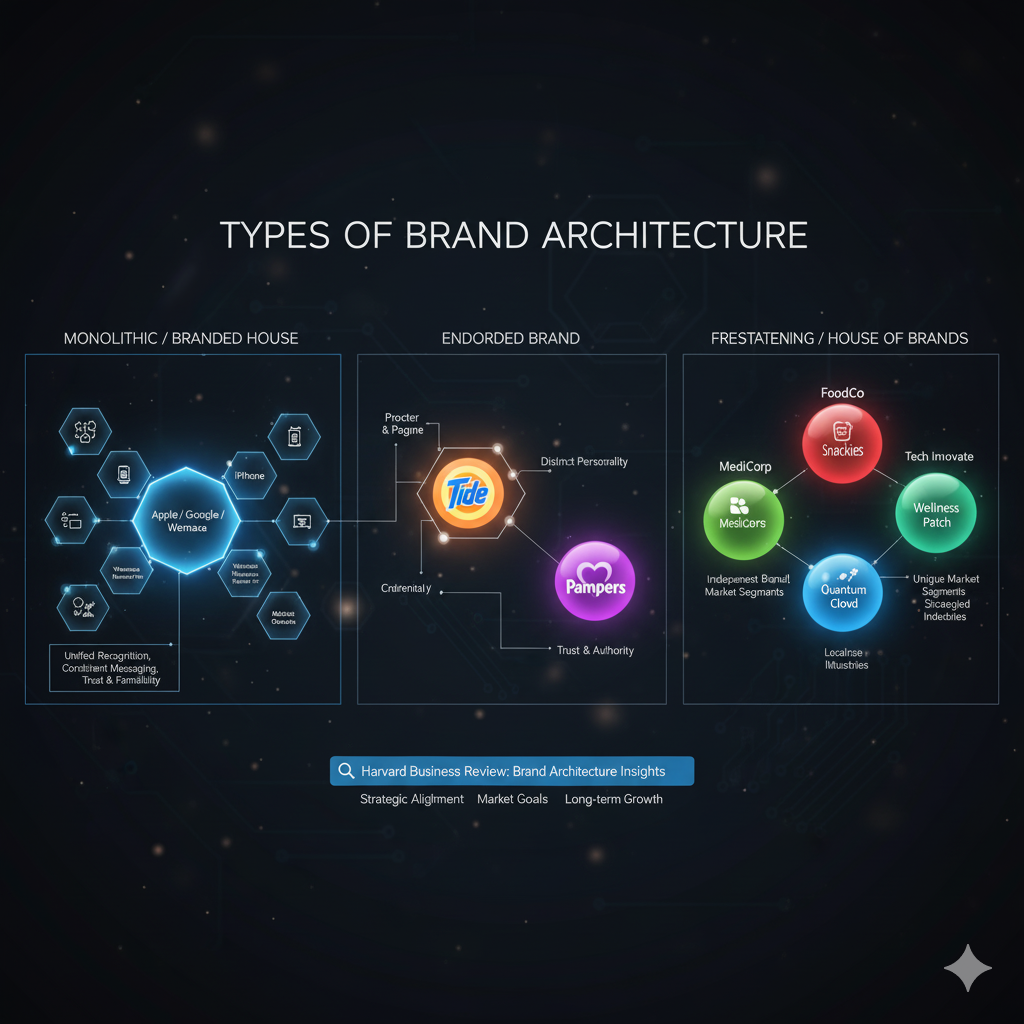
Let one brand carry the portfolio
A branded-house structure keeps the master brand highly visible across products and services. New offers benefit from established recognition, while the organization carries one core identity and a more centralized messaging system.
- Useful when: offers share a common promise, audience expectation or reputation.
- Strength: marketing and identity investment can reinforce one recognizable name.
- Watch for: problems in one area can affect perception of the wider portfolio because the relationship is obvious.
Give the sub-brand room to be different
Endorsed architecture lets an offer keep its own name and personality while visibly borrowing credibility from the parent. The relationship can be prominent or subtle depending on how much reassurance the master brand should provide.
- Useful when: a sub-brand needs its own positioning but still benefits from parent recognition.
- Strength: individual brands can target different audiences without fully severing the relationship.
- Watch for: endorsement rules need consistency so the connection does not appear arbitrary.
Separate brands when the markets truly differ
A house-of-brands model allows individual brands to operate with limited visible connection to the corporate owner. This can support different audiences, price positions or categories, but it also means each brand needs enough investment to build its own recognition.
- Useful when: offers serve distinct markets or need substantially different positioning.
- Strength: each brand can develop its own voice, identity and category strategy.
- Watch for: duplication grows quickly when every brand needs separate campaigns, assets and governance.
Start with the portfolio you actually have
Audit the overlap.
Then decide what should stay connected.
Brand architecture is easier to define when the conversation begins with customers, offers and strategic overlap rather than logos. Map what each brand does, who it serves, where equity already exists and where the portfolio is creating avoidable duplication or confusion.

Architecture should make decisions easier
Build a map that teams can actually use.
The architecture becomes operational when every major offer has a defined role: what it is called, which identity system it uses, how the parent appears, who owns the customer relationship, and what can or cannot be shared with neighboring brands.
This clarity is especially valuable during launches, mergers, acquisitions and portfolio expansion. Teams can evaluate a new offer against an existing system instead of creating a new naming or identity exception every time the business changes.
Turn strategy into repeatable rules
Naming, identity and governance need to agree.
A portfolio model only becomes useful when teams know how it affects names, logos, messaging, websites, campaigns and future launches.
Naming hierarchy
Define when the master brand appears in a product or service name, when an independent name is justified and how descriptors or tiers are constructed.
Visual relationship
Decide how much typography, color, symbol logic and layout should be shared across the portfolio and where brands need distinct expression.
Messaging boundaries
Clarify which promise belongs to the corporate brand, which propositions belong to individual offers and where repeated language creates unnecessary overlap.
Portfolio governance
Establish who can create a new brand, approve a sub-brand, retire a name, change endorsement or authorize exceptions to the system.
New-offer decision rules
Give product and marketing teams criteria for deciding whether a new offer belongs under an existing brand, needs endorsement or deserves a new identity.
Review & consolidation
Revisit overlapping brands, low-value distinctions and legacy names when the portfolio changes enough that the current structure no longer serves customers or teams.
Make the brand structure visible online
The website should reflect the portfolio logic.
Brand architecture affects more than identity guidelines. It shapes domains, navigation, service grouping, cross-links, social profiles, campaign destinations and the way customers move between related offers.
Architecture should be stable without becoming rigid
Protect recognition. Leave room for the company to change.
Brand architecture is not a one-time diagram. Acquisitions, new categories, geographic expansion and changing customer expectations can all create reasons to revisit the portfolio. The goal is not constant restructuring; it is having clear principles for deciding when the current model is still useful and when it is creating friction.
A new sub-brand should solve a real strategic problem. A consolidation should make the portfolio easier to understand or operate. An endorsement should transfer useful credibility. When those reasons are absent, adding another identity can simply create more work for customers and teams.
Data can support the review process—search behavior, customer research, sales patterns, brand tracking and product usage can all provide evidence—but structural decisions still require judgment about future strategy, not only a snapshot of current performance.
Architecture connects strategy, identity and digital experience
Build the structure. Then make every touchpoint follow it.
A strong portfolio framework becomes more valuable when naming, visual identity, websites and launch systems all express the same relationships.
Have multiple brands, services or products that no longer fit together cleanly?
Wemaxa can map the portfolio, define the role of the master brand, simplify naming and endorsement rules, and connect the architecture to identity, websites and future launches.