Wemaxa brand storytelling
Turn brand truth into a story people can remember.
Brand storytelling is more than adding emotion to marketing copy. We help shape the narrative structure, audience perspective, visual language, proof points and channel consistency that make a brand easier to understand across websites, campaigns, social content and digital experiences.
Move beyond product description
Give the audience a reason to care about the brand.
The source page is strongest when it focuses on mission, values, audience understanding and consistency. Storytelling works best when those elements are anchored in real brand behavior, recognizable customer tension and evidence that supports the message.

Build the story from something real
A brand story becomes credible when it connects mission, point of view and customer value to evidence. Instead of inventing a heroic narrative after the fact, we identify the moments, decisions, beliefs and outcomes that already reveal what the brand stands for.
- Mission: explain the problem the brand exists to solve without turning the statement into generic aspiration.
- Values in action: show how principles affect products, service, design or customer decisions.
- Proof points: connect claims to examples, process, customer evidence or observable behavior.

Tell the story from the audience’s reality
Strong storytelling does not make the brand the hero of every scene. It understands what the audience wants, what gets in the way and what kind of change feels meaningful to them. That perspective helps the message stay relevant without relying on forced emotion.
- Goals: understand what the customer is trying to accomplish beyond the immediate purchase.
- Tension: identify the real friction, tradeoff or uncertainty the brand can legitimately address.
- Language: use vocabulary that sounds natural to the audience instead of internal company jargon.
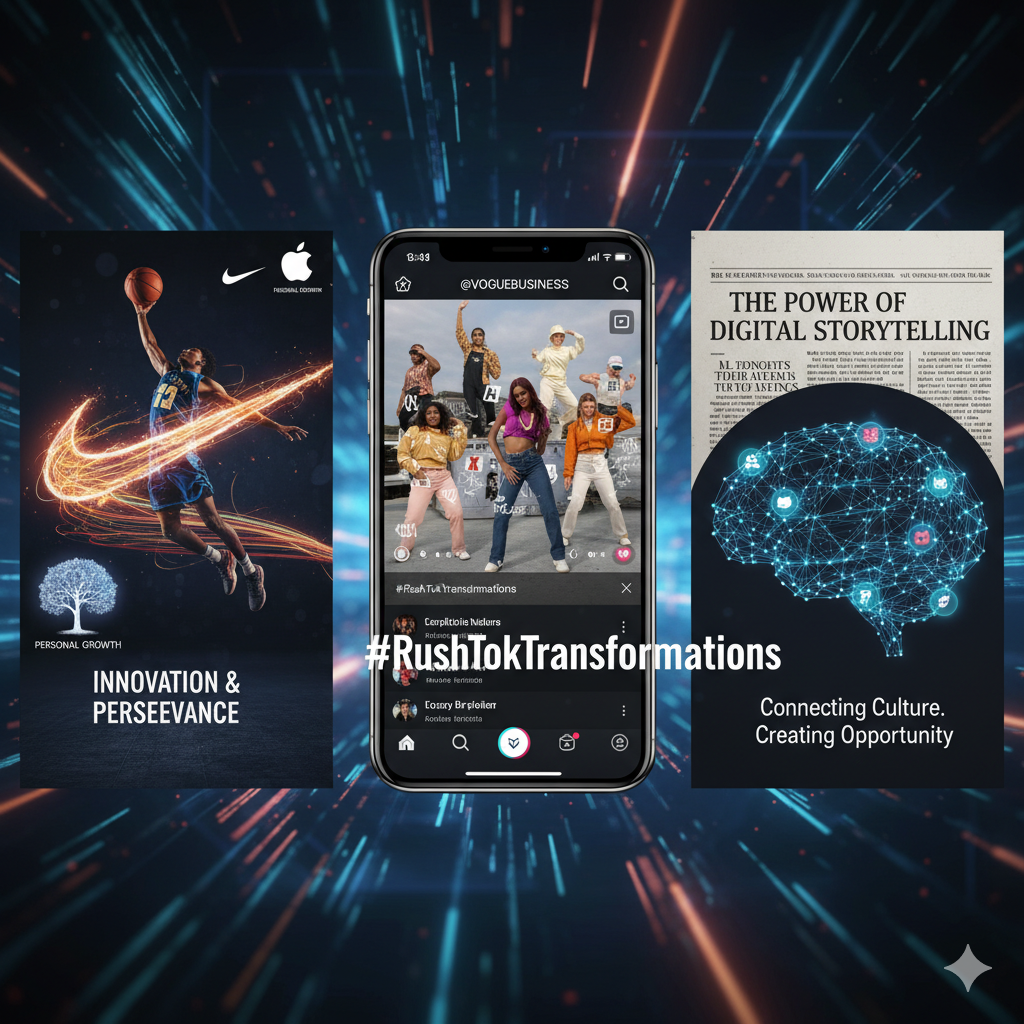
One brand voice. Different formats.
Websites, social posts, campaigns, packaging and video do not need identical copy, but they should feel as if they came from the same worldview. We define the narrative themes, voice boundaries and repeatable proof points that allow each channel to adapt without drifting into a different brand personality.
- Website: establish the long-form narrative, positioning and supporting proof.
- Campaigns: compress the story around one tension, idea or outcome.
- Social: break the narrative into short scenes, reactions, behind-the-scenes moments and community conversation.

Storytelling that also answers real questions
SEO and storytelling are compatible when the content genuinely serves the audience. Search terms can guide subject choice and vocabulary, while the narrative gives the page a clear point of view and memorable structure. Keywords should support the story, not interrupt it.
- Intent-led topics: create stories around questions and decisions the audience already cares about.
- Natural language: incorporate relevant terminology without writing for an algorithm instead of a person.
- Shareable structure: build memorable scenes, examples and visual moments that can be repurposed across channels.
Give the story movement
Context creates meaning.
Proof earns the promise.
A useful brand narrative does not need to follow one rigid screenplay formula, but it usually needs movement. The audience should understand where the brand begins, what tension matters, what changed or was learned and what evidence makes the eventual promise believable.
The narrative should survive outside one campaign
Build a story system, not one clever headline.
A durable brand story gives teams a repeatable framework for product launches, landing pages, social posts and future campaigns. It defines the themes the brand can credibly own, the proof points that support them, and the voice limits that keep execution coherent even when many people create content.
This system can also guide AI-assisted content production. AI may help generate variations, summarize research or adapt a message to different formats, but the brand truth and editorial judgment still need to come from people who understand the company and its audience.
Different channels need different scenes
Adapt the story to how people consume it.
The source discusses social media, short-form video, interactive storytelling and emerging technologies. The useful principle is not to chase every format; it is to choose the format that best expresses the idea while preserving consistency and credibility.
Long-form brand narrative
Use the website to explain positioning, origin, proof, process and customer value with enough depth to support the rest of the brand.
Short-form story scenes
Break larger narratives into moments, reactions, behind-the-scenes context, customer questions and visual hooks suited to the platform.
Launch & campaign narratives
Focus one campaign on one tension and one promise, then support it with proof rather than trying to explain the entire brand at once.
Visual story sequencing
Use movement, pace, character, environment and sound to show change rather than relying on a voice-over to explain every point.
Immersive & interactive formats
AR, product interaction and guided digital experiences can add value when interaction helps the audience understand something that static content cannot.
AI-assisted personalization
Use audience signals to adapt examples, ordering or content emphasis where appropriate without inventing fake brand history or manipulating users with false personal context.
Storytelling is not a substitute for substance
Emotion can attract attention. Credibility keeps it.
The original page sometimes implies that storytelling itself boosts loyalty, visibility or long-term growth. Those outcomes depend on the product, customer experience, distribution and whether the story matches reality. A compelling narrative can make positioning easier to understand and remember, but it cannot repair a weak offer or inconsistent customer experience on its own.
SEO should be treated the same way. Storytelling can make useful content more engaging and distinctive, but adding keywords to a narrative does not guarantee better rankings. Search performance still depends on relevance, technical accessibility, competition, site authority and the quality of the content around the search intent.
Emerging tools deserve restraint too. AI personalization, augmented reality and interactive experiences can extend a story, but they are not automatically more authentic because they are newer. The strongest format is the one that helps the audience understand the brand without hiding what is real, sponsored, generated or staged.
Further reading from the original page
Research the channel. Then build the narrative.
The original page linked to outside perspectives on loyalty, audience engagement, social storytelling, content marketing and emerging formats. Those references are preserved here as supporting reading rather than scattered through the primary sales copy.
Have a strong brand but no clear story connecting it all?
Tell us what the company believes, who the audience is, what makes the offer different and where the current message feels fragmented. Wemaxa can shape the narrative, voice, digital presentation and story system into one coherent brand experience.