Wemaxa e-commerce web design
Build the store. Engineer the entire buying journey.
We design e-commerce websites around the complete transaction: catalog structure, product discovery, mobile UX, checkout, payments, inventory, fulfillment, analytics and content. The platform matters, but the real goal is a store that makes products easy to understand, orders easy to complete and operations easy to maintain as the catalog grows.
More than a theme and product upload
Design the store around how people decide to buy.
The source page correctly treats e-commerce as a combination of UX, visual design, functionality, SEO and scalability. We bring those pieces into one system so navigation, product information, checkout and operations reinforce each other instead of becoming separate plugins and fixes.
Catalog structure that stays understandable
Product discovery begins with taxonomy. Categories, variants, attributes, filters and search behavior should reflect how customers actually compare products. For larger stores we plan parent/child relationships, faceted navigation and canonical behavior before hundreds or thousands of SKUs make those decisions expensive to change.
- Clear category hierarchy: organize products around customer intent instead of mirroring internal inventory terminology.
- Useful filtering: expose attributes that genuinely narrow choice without creating duplicate or low-value page combinations.
- Mobile-first discovery: keep search, filters and product comparison usable on smaller screens.

Product pages that reduce uncertainty
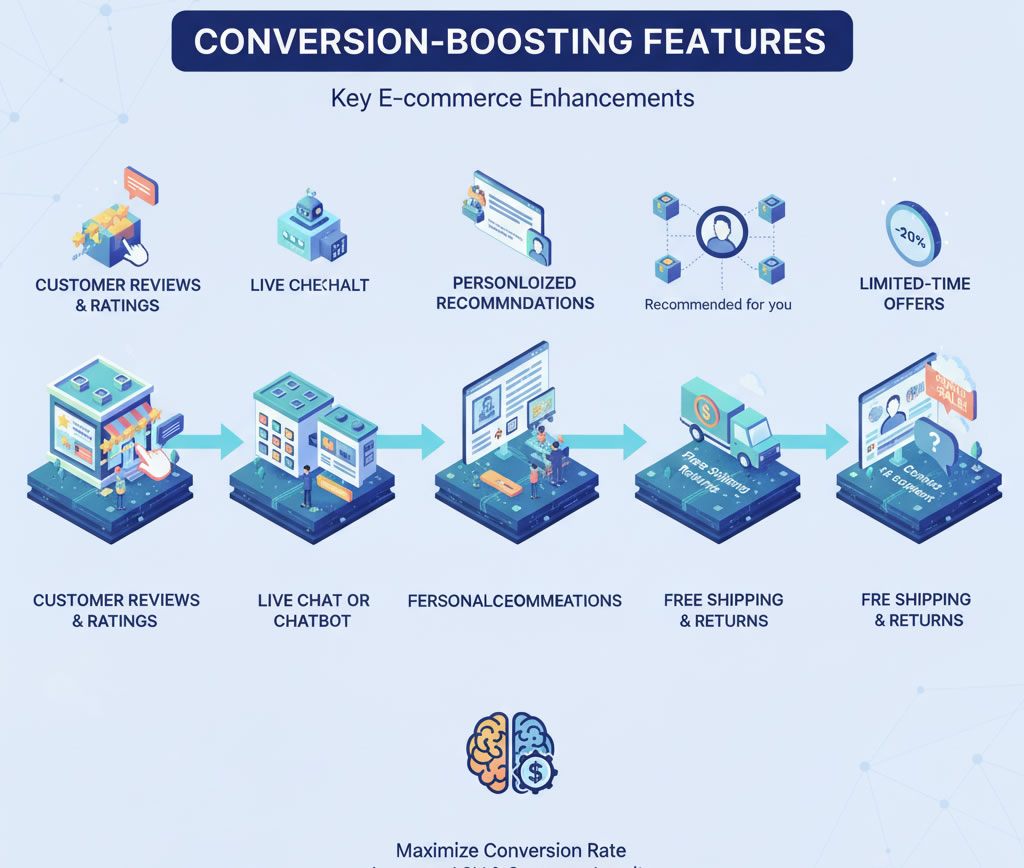
Product detail pages should combine clear imagery, useful specifications, pricing, stock context, delivery information and trustworthy policies without overwhelming the buyer. Reviews, recommendations and supporting content can strengthen the page when they help answer a real purchase question rather than simply adding more widgets.
- Strong product hierarchy: keep title, price, options, availability and primary action visually obvious.
- Trust context: make shipping, returns, support and relevant review information easy to find before checkout.
- Structured product data: expose appropriate product, price and availability information to search engines where supported.
Checkout built for clarity and trust
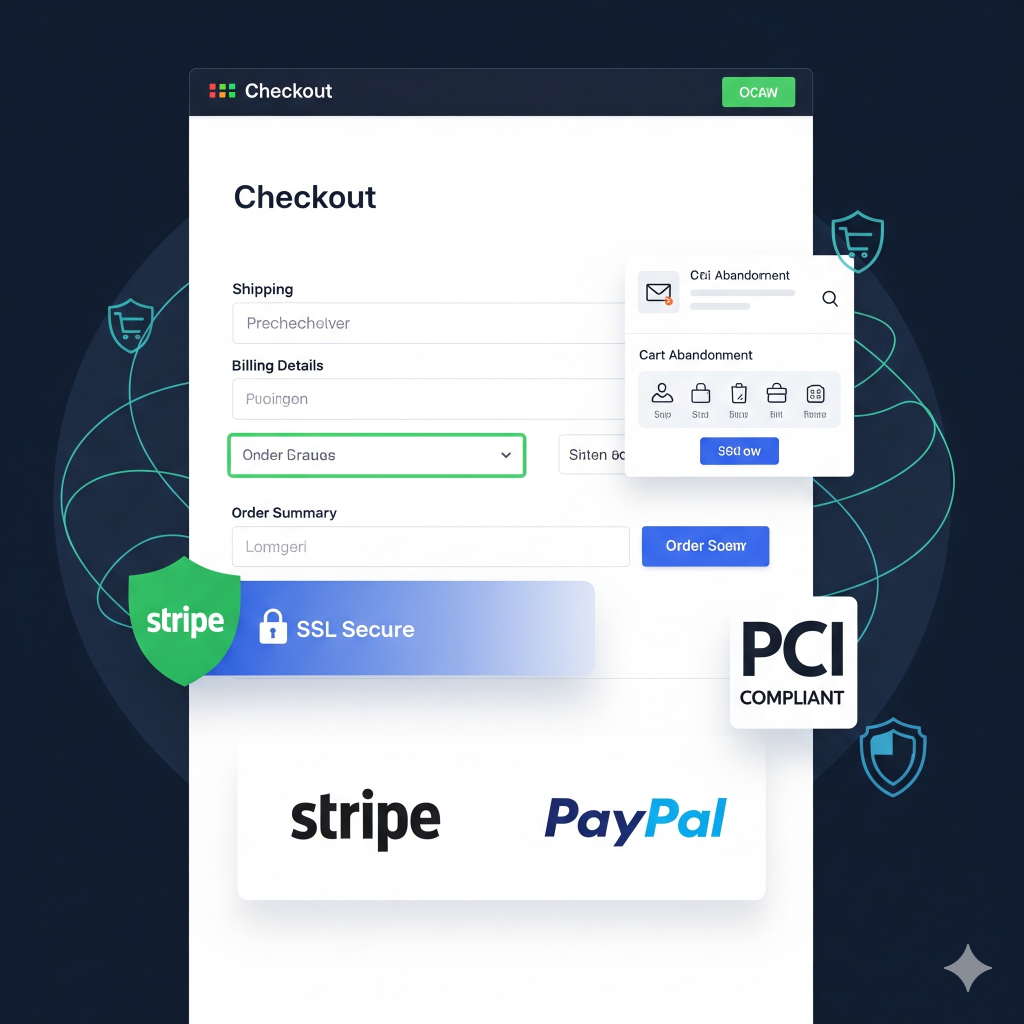
Checkout should make the total cost, delivery options, payment methods and required information easy to understand. Stripe, PayPal and regional payment methods can be integrated where appropriate, but the safest implementation uses the platform and payment provider’s supported controls rather than inventing sensitive payment handling inside the storefront.
- Guest-friendly flows: avoid unnecessary account creation when the business model does not require it.
- Payment flexibility: offer supported methods based on geography, audience and platform capabilities.
- Clear totals: surface shipping, tax and discount effects before the customer confirms the order.
Commerce operations behind the storefront
Inventory synchronization, shipping rules, order status and ERP or marketplace connections shape the customer experience as much as the frontend. We design the operating flow so stock, fulfillment and communication remain visible instead of being split across disconnected dashboards with conflicting data.
- Inventory synchronization: connect stock across channels where APIs and platform capabilities support reliable two-way updates.
- Shipping logic: account for destination, package rules and available carriers in a maintainable workflow.
- Operational analytics: surface order flow, fulfillment issues and customer-service pressure instead of measuring storefront traffic alone.
Every layer influences conversion
Attract the visit.
Earn the order.
E-commerce performance is rarely one isolated design choice. Product architecture influences search visibility. Product content affects confidence. Checkout affects completion. Inventory and fulfillment determine whether the promise made by the interface can actually be kept. We plan those layers as one operating system.

Shopify, WooCommerce, Magento or headless
The best platform is the one your team can operate well.
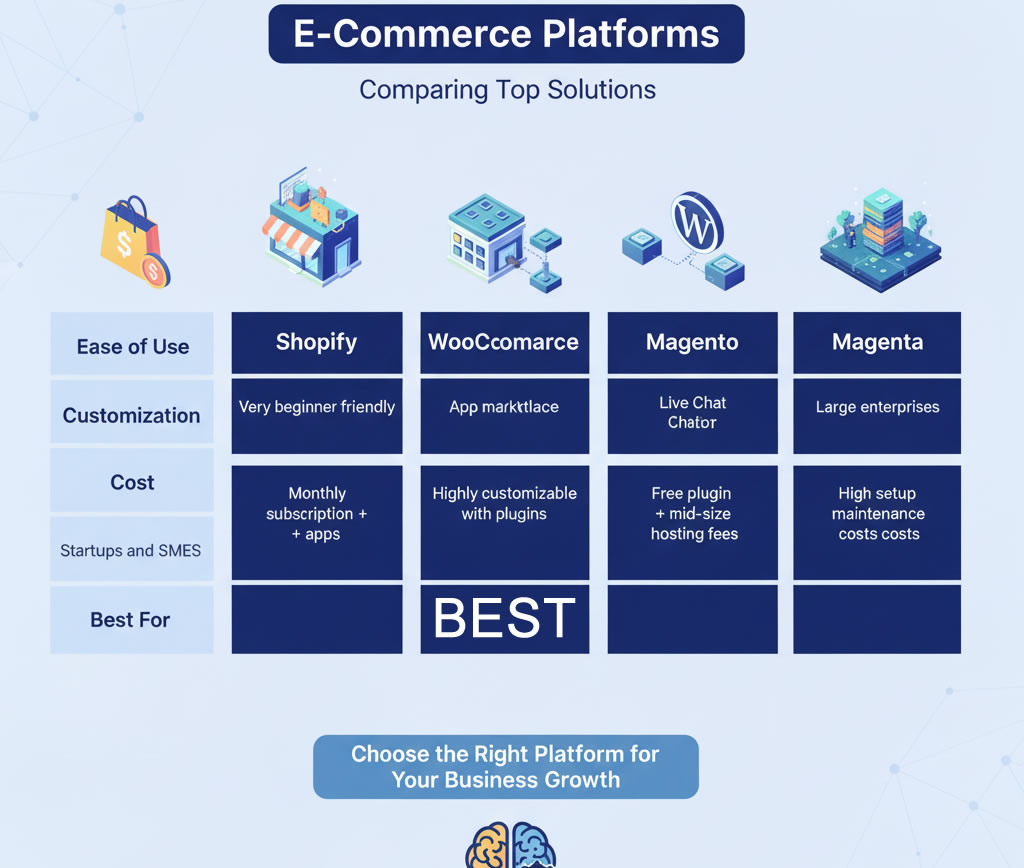
The source compares Shopify, WooCommerce and Magento. That comparison is useful, but platform fit depends on much more than “beginner friendly” versus “complex.” Catalog size, editorial needs, integrations, hosting responsibility, internal technical capacity and total operating cost all matter.
For stores that need a separate frontend, a headless architecture can connect React, Next.js or Vue to commerce APIs. It can improve flexibility for the right team, but it also adds more application infrastructure to operate. The source’s related guide Is WordPress good for e-commerce? remains useful when evaluating WooCommerce specifically.
A store needs more than product templates
Build the pages that support the whole buying journey.
The source lists the core page types every commerce build should consider. We treat them as different jobs in the same system: discovery, evaluation, transaction, account management, education and support.
Homepage & campaign landings
Introduce the offer, current priorities and useful routes into the catalog without turning the first screen into a wall of promotions.
Category & search results
Help visitors narrow a large catalog through useful hierarchy, filters, sorting and contextual content.
Product detail pages
Present imagery, specifications, variants, pricing, availability and purchase context around a single product decision.
Cart & checkout
Make order review, delivery, payment and confirmation understandable with minimal unnecessary steps.
Customer account
Give returning customers access to orders, addresses, subscriptions or saved preferences when the business model needs them.
Content, contact & support
Use guides, FAQs, policy pages and support channels to answer questions that would otherwise block discovery or purchase.
Commerce keeps moving after launch
Connect the storefront to marketing and operations.
The source covers reviews, cart recovery, loyalty, subscriptions, inventory, ERP, analytics, multilingual stores and personalization. These can all add value, but only when the underlying data and customer journey are clear enough to support them.
Cart & lifecycle email
Connect order communication, abandoned-cart reminders and post-purchase follow-up without overwhelming customers with redundant automation.
Upsell & cross-sell
Surface complementary products where they genuinely help the buyer rather than filling every step with extra offers.
Multi-channel stock
Coordinate available inventory across supported marketplaces, physical locations and commerce systems where reliable integration exists.
Funnel measurement
Track meaningful steps from product discovery to purchase so decisions are based on behavior rather than pageview volume alone.
Multilingual commerce
Support localized content, regional pricing or language variants with appropriate hreflang and operational workflows where required.
AI & personalization
Use recommendation, tagging or search-assistance systems where customer signals are appropriate, transparent and useful to the shopping experience.
Good commerce design cannot guarantee demand
A strong store removes friction. It does not manufacture product-market fit.
The original page makes several aggressive claims around conversion, SEO, compliance and AI-driven growth. Those areas deserve more precise framing. Better UX, faster pages and clearer checkout can improve the conditions for conversion, but no interface guarantees that people will buy. Search-friendly architecture can improve crawlability and relevance, but it cannot guarantee rankings or rich results.
Security and compliance are similar. SSL, payment-provider integrations, consent tools and access controls can support a compliant implementation, but a website is not automatically PCI DSS, GDPR or otherwise compliant because those technologies are present. Scope, data handling, merchant responsibilities, third-party services and organizational processes still matter.
AI-based recommendations, demand forecasting and pricing support can help merchants analyze signals, but those outputs are estimates rather than guaranteed predictions. We prefer a system where automated recommendations remain measurable and reversible so teams can compare them against real customer and operational outcomes.
Related Wemaxa resources from the source include the Web Design services, Services, FAQ and Pricing & Plans.

Need an online store that works beyond the homepage?
Tell us what you sell, how large the catalog is, which payment and fulfillment systems are already in place and where the current store is creating friction. Wemaxa can shape the UX, commerce architecture, integrations and operating workflows into one coherent e-commerce platform.