Wemaxa AI integration
AI that connects to real systems.
We move AI beyond isolated demos by connecting live business data, secure APIs, custom interfaces, automation and production infrastructure into systems that can actually operate inside your business. Every integration is designed around real workflows, measurable performance and long-term maintainability—not just a successful prompt in a test window.
From live context to controlled action
Make intelligence useful inside the workflow.
Reliable AI requires more than access to a model. Wemaxa connects current data, application logic, secure integrations, performance controls and operational visibility so AI can participate in real customer and internal workflows without becoming an opaque layer your team cannot explain, monitor or maintain.
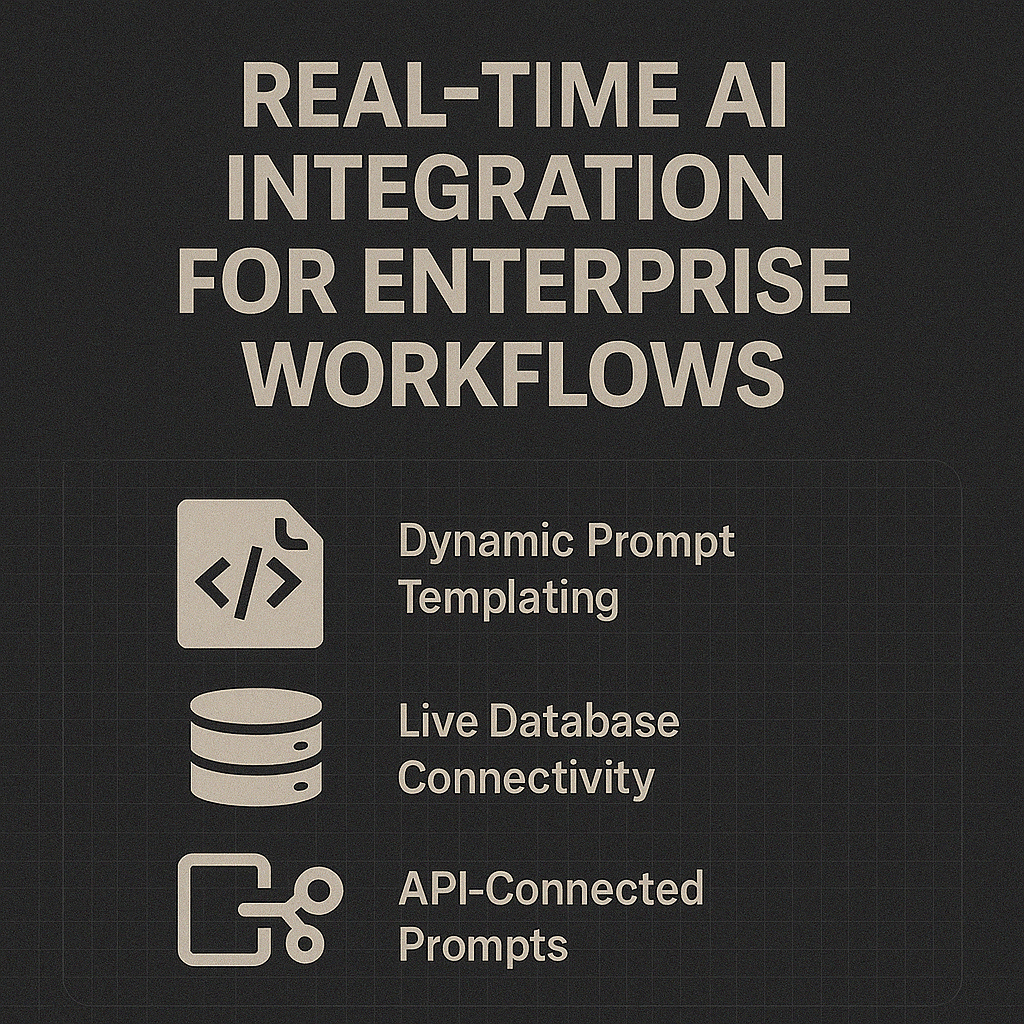
Real-time AI integration
AI responses become far more useful when they reflect what is happening now. We connect model workflows to current product, customer and operational data so outputs are based on live context rather than stale information copied into a prompt.
- Dynamic prompt templating: context is assembled from the latest relevant business information before each model call.
- Live database connectivity: inventory, customer records, support history and internal data can be retrieved under controlled access rules.
- API-connected prompts: CRM, analytics, ecommerce and external services can supply or receive information during an AI workflow.
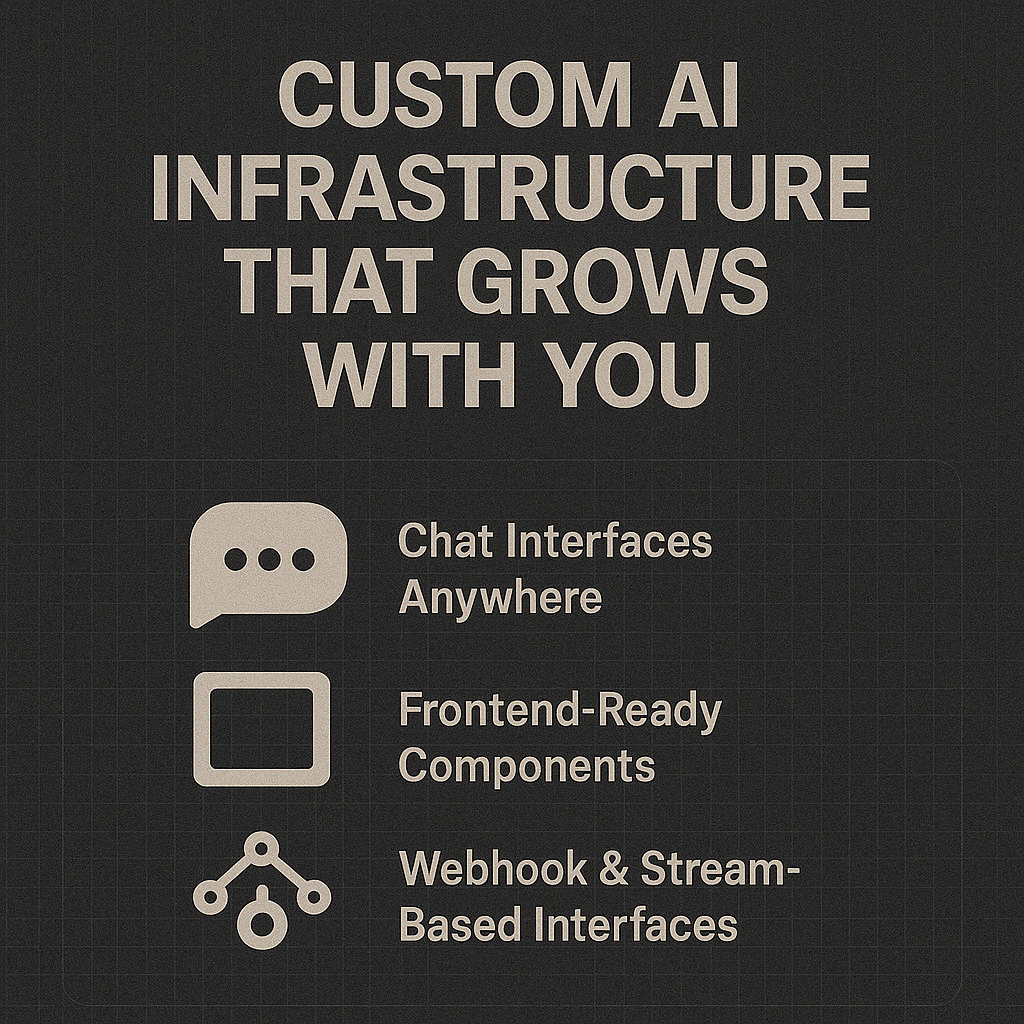
Custom AI infrastructure
AI should fit the product and operating environment you already have. We build modular services and embeddable components that can power customer support, internal assistants, knowledge systems, analytics tools and automated operational workflows.
- Chat interfaces anywhere: secure assistants can be integrated into Slack, Microsoft Teams, Discord, internal portals or customer-facing products.
- Frontend-ready components: React, Vue and mobile interfaces can connect to reusable AI services without duplicating business logic.
- Webhook and stream workflows: WebSockets, queues and event hooks allow AI systems to react to meaningful changes as they happen.
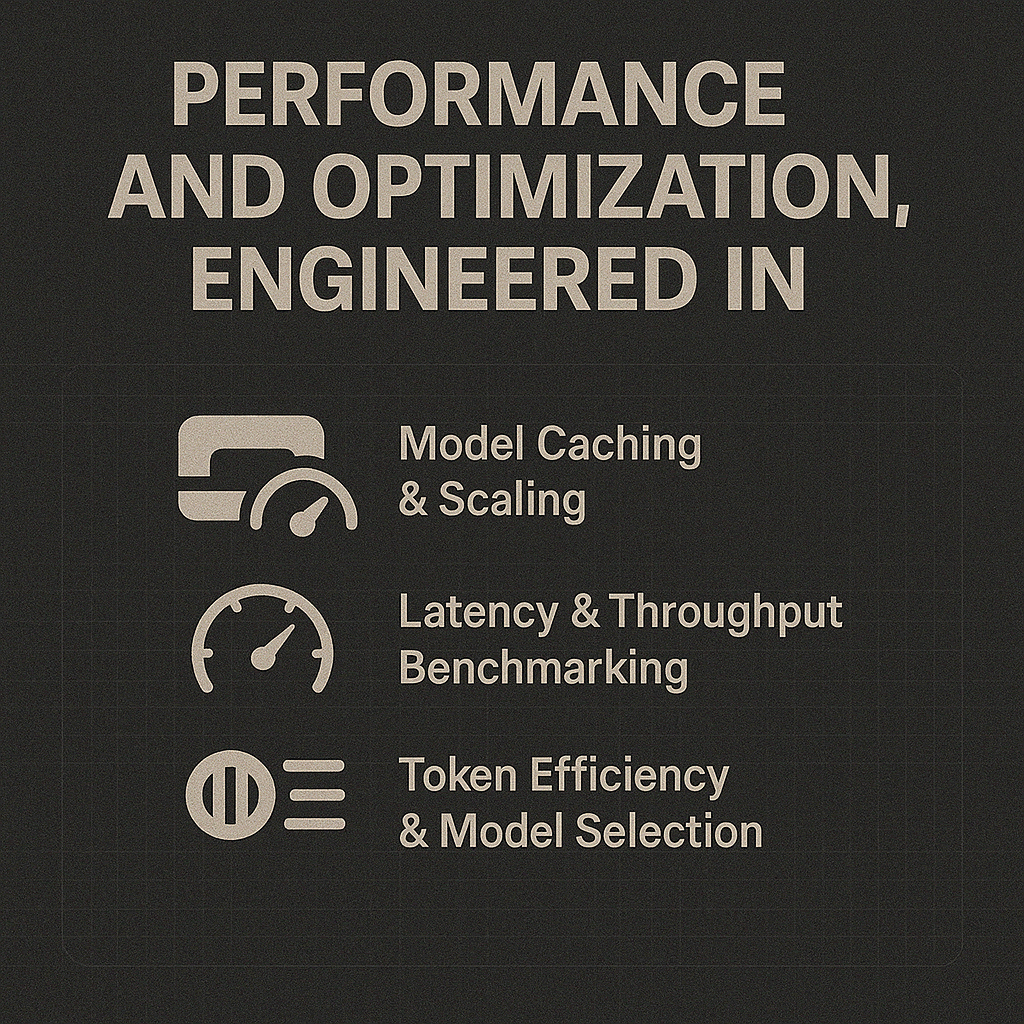
Performance & optimization
Speed, cost efficiency and consistency are treated as operating requirements. We benchmark real workflows, identify where latency is introduced and make model, caching and infrastructure choices based on the performance the product actually needs.
- Model caching and scaling: repeated work can be reduced and high-traffic services can scale around actual demand.
- Latency and throughput benchmarking: P95/P99 response time, concurrency and failure behavior can be measured under realistic load.
- Token and model efficiency: prompts, context size and model selection are tuned to avoid unnecessary cost without sacrificing required quality.
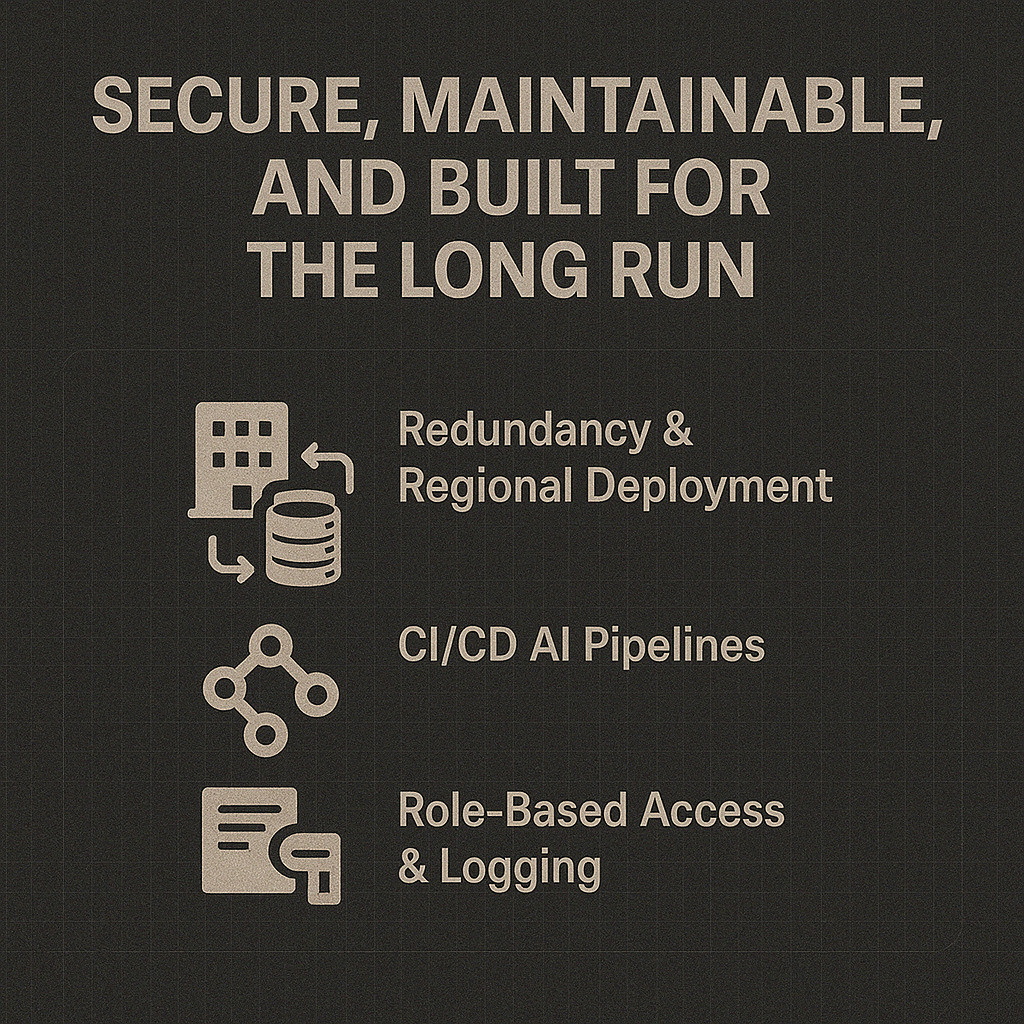
Secure, maintainable AI systems
Getting AI live is only the beginning. We design deployment, access and observability around long-term operation so prompts, tools and integrations can change without losing control over who can use them, what happened and how a release can be reversed.
- Redundancy and regional deployment: critical services can use fallback infrastructure, health checks and monitored recovery paths.
- CI/CD for AI logic: prompts, configuration and application code can be versioned, tested and deployed through repeatable pipelines.
- Role-based access and logging: permissions, redaction and structured logs improve accountability across internal and customer-facing workflows.
Production AI lifecycle
Connect once.
Operate continuously.
Production AI is a living software system. Inputs change, models evolve, APIs fail, user behavior shifts and costs move with usage. We connect integration, evaluation, deployment and monitoring into one operating loop so changes can be introduced deliberately instead of becoming invisible drift.
The surrounding system matters
Everything required to move AI into production.
The model is only one component. We design the surrounding data, interface, integration, deployment and observability layers so AI can become a dependable part of an existing product or business process rather than a disconnected experiment that is difficult to maintain.
Live context & retrieval
Databases, vector search, CRM records, product data and internal documents prepared for controlled model access.
APIs & business systems
REST, GraphQL, webhooks and service integrations connecting AI to ecommerce, support and operational platforms.
Embedded AI interfaces
Chat, copilots, internal tools and frontend components integrated into the products people already use.
Agents & automation
Tool-using workflows, event-driven automation and controlled actions that extend model output into real tasks.
Scaling & cost control
Caching, model routing, concurrency planning and usage visibility designed around expected demand.
Monitoring & governance
Structured logging, evaluation, permissions, redaction and deployment controls for production accountability.
Have an AI prototype that needs to become real?
Tell us what data it needs, which applications it must connect to and what the workflow is expected to accomplish. Wemaxa can help define the integration, performance, security and operating model required to move it from promising demo to dependable production use.